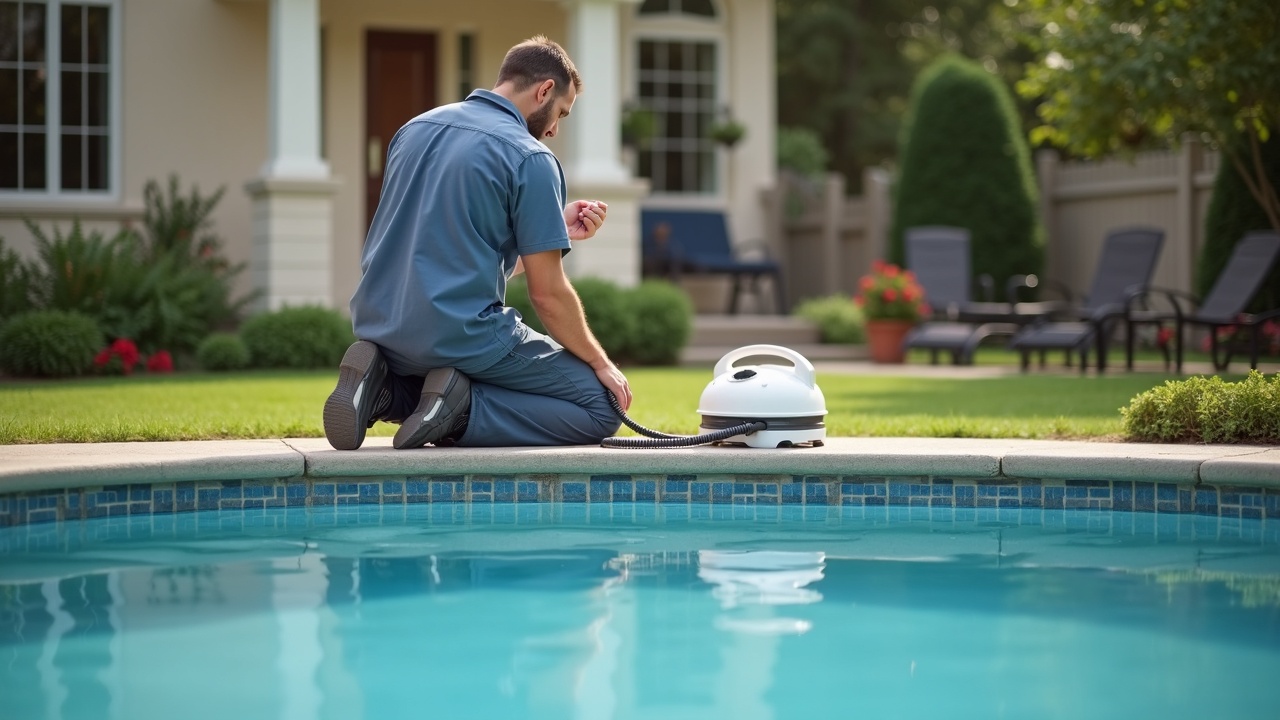
Swimming pool inbound leads are potential customers who call your business directly—often with high intent to book. Pool companies lose these leads to voicemail because owner-operators and techs are poolside, elbows-deep in skimmers and pumps, unable to answer. The revenue impact is staggering: when a pool owner calls three companies and yours doesn't pick up, you've just funded your competitor's next truck.
How Much Revenue Is Going Straight to Voicemail?
Most pool service companies lose 30-50% of their inbound calls to voicemail during peak season. If your average pool cleaning contract is worth $150/month and you're missing 15 calls per week, that's $117,000 in annual recurring revenue walking away—assuming just half would have booked. For pool builds or equipment installs averaging $8,000-$25,000, missing even two calls per week costs you a quarter-million dollars or more each year.
The math gets worse when you factor in callback rates. According to InsideSales.com, when response times exceed five minutes, your chance of qualifying a lead drops by 400%. Pool owners don't wait. They're standing in their backyard, staring at green water or a broken pump, phone in hand, scrolling to the next company on Google. Your voicemail greeting—no matter how polite—is a rejection letter.
Here's what most articles won't tell you: The calls you miss aren't evenly distributed across your week. They cluster during your highest-value windows—Monday mornings after weekend pool parties, Wednesday afternoons when homeowners notice issues mid-week, and Friday before they host guests. These aren't price-shoppers. They're people with immediate problems and budgets already allocated. When your phone rings at 2 PM on a Tuesday and you're vacuuming a commercial pool 40 minutes away, you're not losing a tire-kicker. You're losing a $3,200 replaster job to whoever picks up first.
Want to see the actual dollar impact? Use our revenue calculator to estimate what your missed pool service phone calls are costing you right now.
Why Pool Companies Can't Answer Their Own Phones
Pool service work happens poolside, often with wet hands, chemical-soaked gloves, or while hauling equipment. You can't answer a phone call while balancing on a ladder cleaning a skimmer basket or diagnosing a circulation pump. Even if you could, stopping mid-job to take a booking call adds 15-20 minutes to every service stop—time that pushes your entire route behind schedule and cuts into profitability.
Here's the operational reality for owner-operators in the pool business:
- Route density matters: Your profitability lives or dies by how many pools you service per day. Every interruption—even a five-minute phone call—reduces your daily capacity and pushes you into overtime or forces you to reschedule.
- Chemical safety requires focus: When you're handling muriatic acid, chlorine, or balancing pH, distraction isn't just inefficient—it's dangerous. Pool techs can't toggle between a sales conversation and safe chemical handling.
- Equipment diagnosis takes time: A homeowner calling about a "broken pump" might actually have a clogged impeller, a failed capacitor, or a timer issue. Diagnosing over the phone while kneeling beside someone else's filter takes focus you don't have mid-route.
- Peak call times match peak work hours: Homeowners call between 9 AM and 5 PM—exactly when you're servicing pools. Your busiest revenue-generating hours are also your highest inbound lead volume hours.
The Bureau of Labor Statistics reports that employment in swimming pool services remains chronically short-staffed, with many companies operating at 60-70% of ideal capacity. You don't have an extra person sitting in a truck answering calls. You barely have enough people to complete the route.

What Happens When Pool Owners Hit Voicemail
Pool owners who reach voicemail don't wait for a callback—they move to the next company immediately. In residential pool service, your competition is often just one scroll away on a Google search results page. The homeowner staring at algae blooming in their pool or a filter spitting water onto their deck isn't building a vendor shortlist. They're trying to solve a problem today, and whoever answers first wins the job.
Research from Forrester Research shows that 73% of customers say valuing their time is the most important thing a company can do to provide good service. When you send a pool owner to voicemail, you're telling them their emergency isn't your priority—even if that's not your intention.
Here's the typical cascade after a missed call:
Within 60 seconds: The caller dials the next pool company on their list. If that company answers, you're already out. They're describing their green pool or broken heater to someone else, and that someone else is booking the appointment.
Within 10 minutes: If nobody answers, the homeowner expands their search—new Google query, different keywords, maybe a plea on the neighborhood Facebook group. Your chance of ever hearing from them drops to nearly zero.
Within 24 hours: The job is booked. Your callback—if you even remember to return it—reaches someone who's already scheduled service with a competitor. At best, you're a backup. At worst, you're annoying them.
This is where companies like Book All Leads step in—a full front office team that picks up every call live, qualifies the lead, books the appointment into your calendar, and even collects payment details. No voicemail. No missed revenue. Your phone rings, a real person answers as your company, and the job gets booked while you're still poolside finishing the route.
The Hidden Cost: Reputation Damage from Pool Company Missed Calls
Beyond lost bookings, unanswered calls erode your reputation in ways that compound over time. Pool service is a relationship business, especially in residential markets where neighbors talk, homeowners post in local Facebook groups, and online reviews shape your pipeline for years.
When a homeowner calls and you don't answer, they don't assume you're busy. They assume you don't care. That assumption gets shared—at backyard barbecues, in neighborhood threads, in one-star Google reviews that mention "never picks up the phone." You're not just losing one $2,400 annual cleaning contract. You're losing the three referrals that customer would have sent you over the next two years.
Pool owners also remember which companies made them chase. Even if they eventually book with you after the third callback attempt, the relationship starts with frustration. They're less likely to upsell into equipment upgrades, less patient when you're running late, and less forgiving if something goes wrong. First impressions happen on the first ring, and voicemail is a terrible first impression.
How This Plays Out in Practice: A Real Example
A pool service company in Phoenix was running six routes per week with two techs and the owner. They were booked solid April through September, turning away work. But their phone system told a different story: 38 missed calls in one week during late May, right as pool season peaked. The owner assumed it was just price-shoppers or people calling multiple companies. It wasn't.
When they finally tracked callbacks, they found that 29 of those 38 callers had already booked with competitors. Eight were existing customers calling about equipment failures—people who ended up hiring someone else because they needed help today, not next Tuesday when someone finally called back. One was a property management company looking to contract out 14 community pools. That single missed call cost them $84,000 in annual contract value.
After moving their inbound calls to a dedicated front office team, their close rate on phone leads jumped from 23% to 61%. They added $340,000 in new annual recurring revenue without hiring another tech or buying another truck. The difference wasn't their service quality or pricing. It was just answering the phone.

Why Hiring a Receptionist Doesn't Solve the Pool Lead Problem
Many pool company owners think the solution is hiring a part-time receptionist or asking a family member to cover the phones. This rarely works for three reasons: pool calls require industry knowledge, call volume is unpredictable, and the cost per booking is brutal.
A receptionist answering "ABC Pool Service, how can I help you?" sounds professional. But when the caller asks whether you service salt systems, if you can diagnose a cloudy water issue over the phone, or if you're available for emergency equipment repair, a script-reading receptionist fumbles. They put the caller on hold, promise a callback, or—worse—give incorrect information that costs you the booking. Pool owners can tell within 30 seconds if the person on the phone knows pools or is just taking a message.
Call volume in pool service is wildly seasonal and unpredictable. You might get two calls on a random Tuesday in October and 22 calls on the first hot Saturday in April. Staffing for peak volume means paying someone to sit idle 60% of the time. Staffing for average volume means you're still missing calls during the rushes that matter most.
And the math doesn't work. If you're paying a receptionist $18/hour for 30 hours per week, that's $28,080 per year. If they book 40 new clients annually (less than one per week), you're paying $702 per acquisition—before factoring in payroll taxes, training time, sick days, or the cost of turnover when they quit mid-season.
What About Call Forwarding to Your Cell Phone?
Forwarding calls to your cell just moves the problem. You still can't answer while you're working. Now you're also paying for a forwarding service and training yourself to feel guilty every time the phone buzzes while you're balancing pool chemistry or hauling a pump motor.
Some owners try to answer every call, which destroys their productivity. If you're completing six pools per day and each call interruption costs you 12 minutes (answering, context-switching, refocusing), just three calls per day cuts your capacity by 15%. That's one fewer pool serviced, which over a five-day week is five fewer clients billed—easily $750-$1,200 in lost weekly revenue, or $39,000-$62,000 annually.
How to Stop Losing Swimming Pool Inbound Leads
The fix isn't working harder or adding more hours to your day. It's accepting that you can't do both jobs—service pools and run a front office—at the same time. You need people dedicated to answering calls, qualifying leads, booking appointments, and following up. Not software. Not voicemail transcription. Not a chatbot that promises to "handle inquiries." Actual people who know pool service and represent your company well.
Here's what a functional front office does for a pool company:
Answers every call live: No voicemail. No hold music. A real person picks up within three rings, every time, even at 7 PM on a Saturday when a homeowner notices their pool pump stopped working before their Sunday party.
Qualifies leads on the spot: They ask the right questions—service area, type of pool, current issue, timeline—and determine whether this is a weekly cleaning lead, a one-time equipment repair, or a $40,000 pool build. You only hear about the ones that fit your business.
Books appointments into your calendar: They see your availability, schedule the service call, send confirmations, and handle reschedules. You show up to jobs that are already sold, confirmed, and paid.
Collects payment information upfront: No more chasing invoices or wondering if a new client will ghost after the first cleaning. Payment details are collected when the appointment is booked, and billing happens automatically.
Follows up on estimates and proposals: When you give a quote for a $12,000 heater replacement and the homeowner says "let me think about it," your front office team follows up three days later, a week later, and two weeks later. You're not hoping they remember to call back. You're staying in front of them until they book or explicitly decline.
This isn't a luxury service for national franchises. It's table stakes for staying competitive in local pool service. Your competitors are already doing this—either by overstaffing their office or by outsourcing to teams that specialize in home service bookings. If you're still sending people to voicemail, you're volunteering to lose.
Frequently Asked Questions
What percentage of pool service leads call more than one company?
Most pool owners call three to five companies when searching for service, especially for one-time jobs like equipment repair or pool opening. For recurring cleaning contracts, they typically call two to three companies. Whoever answers first and books the appointment usually wins the job—callbacks rarely convert once a homeowner has already scheduled with a competitor.
How fast do I need to respond to a pool service call to win the job?
Response time is critical. Data from InsideSales.com shows that leads contacted within five minutes are 21 times more likely to convert than those contacted after 30 minutes. In pool service, the window is even tighter—homeowners with urgent issues like green water or broken equipment often book with the first company that answers, period. If you're calling back two hours later, the job is already gone.
Can I just use voicemail and call people back at the end of the day?
You can, but your close rate will be dismal. Most pool owners calling during business hours are comparing multiple companies in real time. By the time you call back at 6 PM, they've already booked morning appointments with whoever answered at 2 PM. Voicemail works for existing customers who need to reschedule or ask a quick question. It fails catastrophically for new lead generation.
What's the difference between a call answering service and a front office team?
A call answering service takes messages and forwards them to you. A front office team answers as your company, qualifies the lead, books the job into your calendar, collects payment details, and follows up. One is a glorified voicemail. The other is a revenue team. If the person answering your phone can't book an appointment and close a sale, you're still losing most of your leads.
How do I know if missed calls are actually costing me revenue?
Check your call logs or phone service dashboard for missed and abandoned calls over the past 30 days. Multiply that number by your average close rate (typically 20-40% for pool service) and your average job value. If you missed 40 calls last month, closed 30% historically, and your average new client is worth $1,800 annually, you lost $21,600 in revenue. Most pool companies are shocked when they actually run the numbers.
What if I'm too small to afford a full front office team?
If you're doing $250,000+ in annual revenue and missing even 10 calls per week, you're leaving enough money on the table to pay for a team twice over. The ROI isn't about size—it's about lead volume and conversion. A solo operator with a strong local reputation and consistent inbound calls often sees better returns than a five-truck operation with poor phone habits, because every missed call represents a higher percentage of their total pipeline.
Stop Sending Pool Owners to Voicemail
Every swimming pool inbound lead that hits your voicemail is a paying customer you're handing to a competitor. The solution isn't working longer hours or answering your phone while you're balancing pool chemistry. It's building a front office that picks up every call, books every job, and turns your phone into the revenue engine it should be.
You're already doing the hard work—servicing pools, diagnosing equipment, keeping customers happy. Don't let the easiest part of the business—answering the phone—be the reason you lose six figures in annual revenue.
If you're ready to stop losing leads to voicemail, Book All Leads can have your front office team live in five days. No software to learn. No contracts. Just a team that answers your calls, books your jobs, and gets paid when you do. Let's fix this.
John Edmonds is a native Texan and military combat veteran. He founded Book All Leads after identifying a critical gap in the service industry: business owners losing revenue not from lack of skill, but because no one was handling the calls, follow-ups, reviews, and payments while they were busy doing the work.
View LinkedIn Profile →