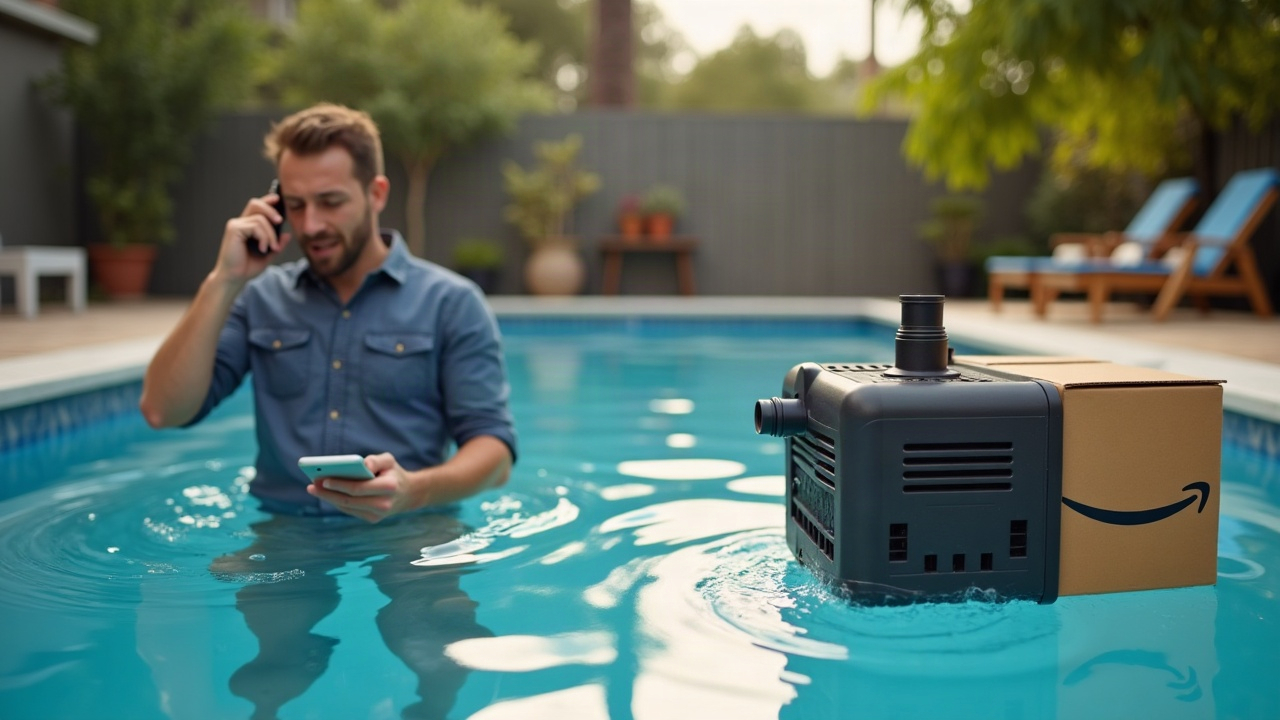
Swimming pool pump sales are slipping away from local pool companies because online retailers undercut on price while pool pros fail to capture emergency replacement calls fast enough. Homeowners compare a $499 pump on Amazon to your $899 installed quote and assume you're overcharging—but the real loss happens when their pump dies at 9 AM on a Tuesday and you miss the call. That's a $1,200 same-day install walking straight to the big-box store.
Why Pool Companies Are Losing Swimming Pool Pump Sales
You're losing pump sales in two distinct ways: the planned purchase where homeowners research online and buy direct, and the emergency replacement where they can't reach you. The second category is where most local pool companies bleed revenue without realizing it. When a pool pump fails during swim season, homeowners enter panic mode. They'll pay premium pricing for same-day installation—but only if they can reach someone who answers immediately and commits to a time window.
According to InsideSales.com, lead response time directly correlates with conversion rates: businesses that respond within five minutes are 100 times more likely to connect with and convert a lead than those who respond after 30 minutes. In the pool service world, that five-minute window isn't just about conversion—it's about capturing the entire sale before the customer drives to Leslie's.
The typical scenario plays out like this: A homeowner wakes up to a silent pump. They need their pool running before the weekend party or before algae takes over. They call three pool companies. The first doesn't answer—it's 8:47 AM and the crew is already on jobs. The second answers at lunch and says they can schedule a quote for Thursday. The third picks up immediately, quotes a ballpark price, and offers a 2-4 PM installation window today. Who gets the sale?
Here's what most articles won't tell you: The price objection you think you're facing on pump sales isn't about your markup. It's about perceived value in a moment of crisis. A homeowner who can't reach you assigns zero value to your expertise, your warranty, your ongoing service relationship. They default to the only number they can see: the Amazon price. But the homeowner whose call you answer in 30 seconds will pay $400 more than retail for a pump installed that afternoon—because you've just solved their emergency.
What's Really Happening When You Lose Pool Equipment Sales
Most pool service owners believe they're competing on equipment pricing. You see the $499 Hayward or Pentair pump on Amazon, calculate your costs including labor and warranty, and land at $899 installed. The customer balks. You assume they'll buy online and install it themselves, so you drop your price or let the sale go. Neither assumption is accurate for the majority of pool owners.
The reality is more nuanced. Homeowners fall into three categories:
- The 15% DIY segment: They were always going to buy online and attempt self-installation. You were never competing for this sale. They'll call you six weeks later when the pump won't prime.
- The 25% planned replacement segment: Their pump is aging but functional. They're researching, getting quotes, and yes, comparing your installed price to online retail. This is where transparent pricing and value-stacking matter.
- The 60% emergency segment: Their pump just died. Pool's green or getting there. They have guests coming or kids home for summer. They need it fixed today. They will pay premium pricing—if they can reach you first.
That third category represents the majority of pump sales in the field, yet most pool companies have no system to capture these calls. The owner is on a jobsite. The office phone goes to voicemail. The "emergency line" is the owner's cell, which is silenced during customer conversations or sitting in a truck while he's wrestling with a sand filter.
The 60-Minute Window That Determines Who Gets the Install
Emergency pool equipment failures create a shrinking window of opportunity. When a homeowner discovers a broken pump, they enter a one-hour decision window where they'll make three to five calls. Whoever answers first with confidence and a same-day commitment wins. Whoever calls back three hours later gets, "Thanks, but we already got someone coming out."
This isn't speculation. Track your missed calls and follow-up conversion rates. The calls that come in before 10 AM about equipment failures—and that you return after 2 PM—convert below 15%. The same calls answered live within two minutes convert above 60%. The difference isn't your pricing or expertise. It's physics: the customer already bought by the time you called back.
Many pool service owners solve this by being perpetually available, answering their cell between tasks, during lunch, after hours. This works until it doesn't—until you're on a ladder, elbow-deep in a filter housing, or finally sitting down to dinner. The calls you miss during those moments are disproportionately high-value: equipment failures, leak emergencies, green pool panic. The routine "just checking on my weekly service" calls can wait. The "$1,200 same-day pump install" calls cannot.
This is where a dedicated team handling your calls changes the math entirely. Book All Leads operates as your complete front office—six roles working around the clock to answer every call in under 30 seconds, quote accurately from your price book, and book the job into your actual schedule. No software for you to learn. No voicemails to return at lunch. Just a live person answering with your company name while you're installing pumps, not chasing phones. The emergency replacement calls that used to go to voicemail now turn into booked same-day jobs before you've finished your current install.

How to Win Swimming Pool Pump Sales Back from Online Retailers
Recapturing pump sales requires shifting from equipment vendor to emergency service provider. You're not selling a Hayward Super Pump—you're selling same-day resolution of a crisis. Frame your offer accordingly, and structure your operations to deliver on that promise.
Answer Every Call in Under 60 Seconds
This is non-negotiable for emergency equipment sales. Every call that rolls to voicemail is revenue walking to a competitor or a big-box store. Calculate what you're losing by tracking missed calls for one week and multiplying by average pump install revenue. Most pool service companies discover they're missing $3,000 to $8,000 monthly in equipment sales simply because they can't answer the phone.
If you're a solo operator or running a small crew, you have three options: hire a dedicated office person (expensive, limited hours), use an answering service that takes messages (useless for same-day bookings), or hand your front office to a team that knows pool service and can actually book the job.
Quote Installed Pricing Immediately
The homeowner calling about a dead pump doesn't want to schedule a quote appointment for Thursday. They want a number now. Build a pricing matrix that allows whoever answers your phone to quote standard pump installations on the spot: single-speed, variable-speed, above-ground, in-ground, with or without timer replacement. Include labor, permit if required, haul-away, and a 90-day warranty on the install.
Will you occasionally quote a job that turns out more complicated on-site? Yes. Build a 10% buffer into your phone quotes and train your team (or the team answering for you) to flag edge cases: "That's our standard installed price for an in-ground single-speed replacement. If your plumbing needs modification or we find other issues, we'll call you before we proceed. But most replacements we complete at that quoted price."
Offer Same-Day or Next-Day Installation Windows
This is your competitive moat against online retailers. Amazon delivers the pump tomorrow, but the homeowner still needs to install it, troubleshoot it, or hire someone—and most pool techs won't install customer-supplied equipment. You're offering a completely solved problem: "We'll have your pool running again between 2 and 5 PM today. I'm blocking that time for you right now."
Operationally, this requires holding partial capacity for emergency calls. Most pool service routes are packed solid with weekly maintenance. Build flex time into your schedule—even just a 3-hour window twice a week—for same-day equipment calls. These jobs often pay more per hour than routine maintenance and generate ongoing service relationships.
Position the Installation as the Product
Stop defending your pump markup. Reframe the entire conversation. When a homeowner says, "I can get this pump for $499 on Amazon," your response isn't to justify your $899 price—it's to clarify what they're actually buying: "The pump itself is available lots of places. What you're getting from us is professional installation today, a pressure test to confirm it's running at proper flow, a 90-day warranty on the install, and a company that'll be here next week if something goes wrong. The homeowner who installs the Amazon pump themselves saves $400 today and spends six hours and three trips to the hardware store figuring out why it won't prime. We're selling you your weekend back."
Bundle Pumps with Service Plans
Every pump installation is an opportunity to enroll a customer in ongoing maintenance. At the point of sale, offer a seasonal service package: "We can install this pump today for $899, or we can install it and include your opening and closing service for the next two years at $1,499 total—saves you about $300 and keeps us maintaining the equipment we just installed." Bundling turns one-time equipment sales into recurring revenue and reduces the price sensitivity on the pump itself.
Why Pool Equipment Markup Isn't the Real Issue
The markup conversation is a red herring. According to National Association of Home Builders research on specialty trade contractors, markup on materials typically ranges from 20% to 50% depending on trade and market. Pool equipment falls comfortably in that range. Your $400 markup on an installed pump isn't out of line—it's covering your truck, your license, your insurance, your labor, and your expertise.
Homeowners who fixate on the equipment cost are comparing apples to oranges. They're looking at a product price versus a service price. Your job isn't to cut your margin to match Amazon—it's to shift the conversation away from the product entirely. The customers who value speed, convenience, and professional installation will pay your price. The customers who don't were never your ideal clients anyway.
But you can only have this conversation if you answer the phone. The homeowner comparison-shopping online is researching planned replacements—they're in discovery mode, and yes, they'll call three companies and compare quotes. That's fine. Take those calls, provide transparent pricing, and convert a reasonable percentage. The homeowner calling because their pump died this morning isn't comparison shopping—they're buying from whoever solves their problem fastest. Miss that call and you've lost a sale you would have won at full margin.
The Role of Pool Pump Installation in Customer Lifetime Value
Equipment sales matter beyond the immediate transaction. A homeowner who buys a pump from you—and experiences fast, professional installation—becomes a maintenance client. They call you first when the heater acts up. They refer you to neighbors. Over a five-year relationship, that initial $899 pump sale generates $4,000 to $8,000 in additional revenue from maintenance, repairs, chemical sales, and referrals.
Research from Bain & Company shows that increasing customer retention rates by just 5% can increase profits by 25% to 95%, depending on the industry. In service businesses with recurring revenue models—like pool maintenance—the lifetime value of a retained customer far exceeds the initial transaction. Losing a pump sale to Amazon doesn't just cost you $400 in margin today. It costs you the entire relationship.
This makes the call-answering piece even more critical. Every missed equipment emergency call is both a lost sale today and a lost long-term customer. The homeowner who can't reach you installs the Amazon pump themselves or hires a handyman. You're now out of their consideration set. They don't call you for opening, closing, or weekly service. They're not referring you. That single missed call just cost you thousands in lifetime value.
Real Example: A Pool Service Company That Stopped Losing Pump Sales
A pool service company in Phoenix was losing equipment sales consistently. The owner knew customers were buying pumps and filters online, but he didn't realize how many emergency calls he was missing until he reviewed three months of call logs. Out of 87 calls that went to voicemail, 34 mentioned equipment failure. He returned those calls within two hours on average. He booked six jobs. The other 28 had already hired someone else or bought equipment retail.
He calculated the loss: 28 missed equipment installs at an average ticket of $950 meant $26,600 in lost revenue over three months—over $100,000 annually. The problem wasn't his pricing or his service quality. It was availability. He couldn't answer calls while servicing pools, and his customers wouldn't wait.
He brought on a front office team to handle calls, quote jobs, and book his schedule. Within 60 days, his equipment sales doubled. Not because he dropped prices—he actually raised them slightly—but because he was answering every call within 30 seconds and booking same-day or next-day installations. Emergency pump replacements, which previously converted at 18% when he called customers back, now converted at 67% when answered live. His revenue from equipment sales went from $6,800 monthly to $14,200 monthly. The front office investment paid for itself in week one.
Frequently Asked Questions
Should I match Amazon's pricing on pool pumps to stay competitive?
No. You're not competing with Amazon on product pricing—you're offering a completely different product. Amazon sells a pump. You sell installed, warranted, same-day service. Matching their price only trains customers to see you as a product vendor instead of a service provider. Focus on answering calls fast, offering immediate installation, and positioning your expertise as the value. The customers who only care about the lowest product price were never your target market.
How can I offer same-day pump installation when my schedule is packed?
Reserve flex capacity specifically for emergency equipment calls. Even holding a 3-hour window twice a week for urgent jobs allows you to capture high-margin same-day installs. These jobs typically pay better per hour than routine maintenance and generate new long-term customers. Consider adjusting your weekly service routes to create afternoon availability on specific days, and train your front office to route emergency calls into those slots.
What should I say when a customer says they found a cheaper pump online?
Reframe the conversation immediately: "The pump is available lots of places—what you're hiring us for is professional installation today, pressure testing, warranty on the work, and a company that's here if anything goes wrong. Most homeowners who try to install themselves spend six hours and make multiple hardware store trips. We're selling you the solution, not just the equipment." Then confirm the installation window and move toward booking.
How do I calculate how much revenue I'm losing from missed calls?
Review your call logs or voicemail system for one month. Count how many calls mentioned equipment failure, leaks, or urgent repairs. Multiply that number by your average equipment install ticket (typically $800-$1,500 for pumps and filters). Most pool service companies discover they're missing $3,000 to $8,000 monthly in equipment revenue simply from unanswered calls. You can calculate your losses based on your missed call volume and average ticket.
Should I install customer-supplied equipment if they buy the pump online?
Most pool service pros avoid this. You inherit liability for equipment you didn't source, you can't warranty the installation fully, and you're training customers to see you as hourly labor instead of a trusted service provider. If you do accept customer-supplied installs, charge a premium labor rate and make it clear you warranty only the installation, not the equipment. Better strategy: respond so fast to equipment failure calls that customers don't have time to buy online first.
What's the best way to quote pump installations over the phone without seeing the job?
Build a pricing matrix for standard scenarios: in-ground single-speed, in-ground variable-speed, above-ground, with or without timer upgrade. Quote the standard price immediately and add: "That's our typical installed price for your setup. If we find complications on-site—modified plumbing, electrical issues—we'll call you before proceeding with any additional work. But most replacements we complete right at the quoted price." This gives you flexibility while allowing instant quotes that book same-day jobs.
Stop Letting Online Retailers Take Your Swimming Pool Pump Sales
You're not losing swimming pool pump sales because Amazon is cheaper. You're losing them because you're not answering the phone when the pump dies at 9 AM on a Tuesday. The homeowner in crisis will pay premium pricing for same-day installation—but only if they can reach someone who answers immediately, quotes confidently, and commits to a time window. Every call that rolls to voicemail is a four-figure install walking to a competitor or a big-box store.
The solution isn't cutting your prices or trying to compete with online retailers on equipment cost. It's operationally positioning yourself to capture emergency calls the moment they come in. That means answering every call in under 60 seconds, quoting installed pricing immediately, and offering same-day or next-day service. The pool service companies winning equipment sales aren't the cheapest—they're the fastest to answer and the easiest to do business with.
If you're ready to stop missing high-value equipment calls and start converting emergency replacements at 60%+ instead of 18%, Book All Leads can have your front office running in five days. Every call answered. Every job quoted and booked. No software to learn, no contracts, just a team that makes sure you never lose another pump sale to voicemail.
John Edmonds is a native Texan and military combat veteran. He founded Book All Leads after identifying a critical gap in the service industry: business owners losing revenue not from lack of skill, but because no one was handling the calls, follow-ups, reviews, and payments while they were busy doing the work.
View LinkedIn Profile →