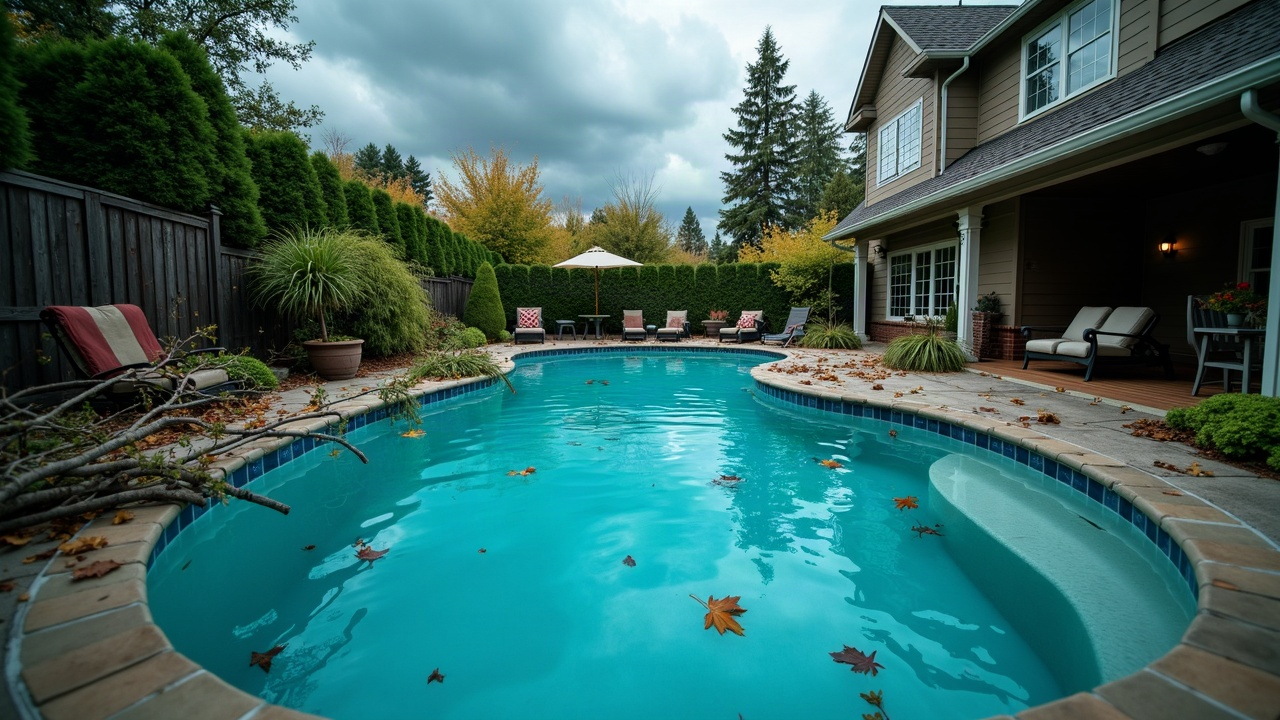
Swimming pool storm calls spike when homeowners panic after severe weather — but most pool service companies miss these high-value opportunities because they're not answering their phones. After thunderstorms, hail, or wind events, property owners discover debris, cloudy water, equipment failures, and visible damage that demand immediate attention. When they can't reach you, they call the next company on Google. These aren't routine maintenance inquiries — they're motivated buyers ready to book service today, often willing to pay premium rates for fast response.
Why Do Pool Companies Lose Revenue After Storms?
Pool service companies lose storm-driven revenue because they're understaffed when demand surges. Most owner-operators run lean teams focused on scheduled maintenance routes. When a severe weather event triggers 40-60 inbound calls over a weekend, nobody's available to answer. Voicemails pile up, text inquiries go unread, and by Monday morning when you start returning calls, homeowners have already booked with competitors who answered on Saturday afternoon.
The problem intensifies because post-storm pool cleanup represents premium-priced emergency work. Homeowners aren't price shopping — they're problem solving. A tree branch punctured their pool liner, the pump won't restart after a power surge, or two feet of leaves turned their water into swamp sludge. They need help now, not a callback in 48 hours.
According to InsideSales.com, contact rates drop by over 400% when you wait more than 5 minutes to respond to an inbound lead. For storm-related pool damage calls, that window compresses even further. Homeowners experiencing an active crisis will call 5-7 companies in rapid succession until someone picks up the phone.
Here's what most articles won't tell you: The real loss isn't just one missed service call. Storm events create entry points for long-term client relationships. A homeowner who discovers you during an emergency becomes a maintenance client for years if you deliver fast, professional service during their moment of need. Miss that first call, and you've lost both the immediate $400-800 cleanup job and the $1,200-2,400 annual maintenance contract that would have followed.
What Happens to Pool Damage After Storm Events?
Storm damage to swimming pools escalates quickly when left unaddressed. What starts as surface debris becomes a chemistry crisis within 24-48 hours as organic matter decomposes, algae blooms accelerate, and filtration systems clog or fail. Homeowners who can't reach their regular pool service provider face mounting anxiety as their $30,000-60,000 backyard investment visibly deteriorates.
The 72-Hour Problem Window
The critical intervention window for pool service weather calls is approximately 72 hours. During this period, homeowners actively seek professional help. After three days without resolution, they either attempt DIY remediation (often making the problem worse) or resign themselves to living with a damaged pool until their regular service technician arrives for the next scheduled visit.
This creates a hidden revenue opportunity. The pool company that answers calls immediately after severe weather doesn't just capture emergency service revenue — they acquire dissatisfied customers from competitors who failed to respond. Every major storm in your service area is essentially a lead generation event, but only if your phone gets answered.
Who Actually Answers Swimming Pool Storm Calls?
The pool companies capturing storm-driven revenue aren't necessarily larger or better equipped — they simply have someone answering the phone when homeowners call panicked on Saturday evening or Sunday morning. This typically means one of three approaches: the owner sacrificing their weekend to field calls personally, a part-time answering service that takes messages without booking capability, or a dedicated front office team that can assess damage descriptions, quote appropriate services, and schedule emergency visits.
Most small to mid-sized pool service businesses operate with 2-8 field technicians and minimal administrative support. When severe weather hits, the owner faces an impossible choice: spend the weekend answering calls and coordinating emergency responses, or ignore the phone and focus on family time while revenue opportunities evaporate.
That's where a solution like Book All Leads changes the equation entirely. Instead of choosing between answering calls yourself or missing opportunities, you get a complete front office team — six specialized roles working around the clock. They answer every call live, assess the damage based on what the homeowner describes, quote your pre-set emergency service rates, book appointments directly into your calendar, and even collect deposits. The homeowner never knows they're not talking to your in-house staff. You never touch the scheduling software because there isn't any to learn — the team manages everything. You're live in 5 days with no long-term contracts.
What Types of Damage Generate Post-Storm Pool Cleanup Calls?
Understanding the specific damage scenarios driving inbound calls helps you price services appropriately and train whoever answers your phone to triage effectively. Storm-related pool service requests typically fall into these categories:
- Debris removal: Branches, leaves, lawn furniture, roofing materials, and fence sections blown into the pool — requires manual extraction before filtration system damage occurs
- Equipment failure: Pumps, heaters, and automation systems that won't restart after power outages or lightning strikes — often requires diagnostic visits and replacement parts
- Structural damage: Punctured liners, cracked decking, damaged pool screens or enclosures — typically requires emergency patching followed by permanent repairs
- Water chemistry disasters: Contamination from flooding, runoff carrying fertilizers/pesticides, or algae blooms triggered by debris decomposition — demands immediate chemical treatment and often complete water replacement
- Drainage and flooding issues: Pool areas flooded by overflow or inadequate drainage, requiring pump-out services and water level restoration

Why Equipment Failures Drive Premium Service Rates
Equipment diagnostic calls generate significantly higher revenue than simple debris removal because they require technical expertise and often same-day or next-day parts procurement. A homeowner with a non-functional pool pump in 90-degree weather will pay diagnostic fees, premium labor rates, and marked-up parts without negotiation. These calls also tend to surface deferred maintenance issues — a storm-triggered failure often reveals that the pump motor was already failing, the heater needed replacement, or the automation system requires upgrading.
The pool service companies that capture these calls don't just fix the immediate problem. They perform a post-storm system inspection, identify all weather-related and pre-existing issues, and present a comprehensive service proposal while they have the homeowner's attention and budget authorization.
When Do Swimming Pool Storm Calls Actually Come In?
Call volume for pool damage after storm events follows a predictable pattern that most pool companies are completely unprepared to handle. The surge begins within 2-4 hours after weather clears as homeowners emerge to assess damage. Peak call volume occurs on weekend afternoons and evenings following Friday night or Saturday morning storms — precisely when most pool service offices are closed.
According to the Bureau of Labor Statistics, service businesses in the building and grounds maintenance sector (which includes pool service) average fewer than 8% of calls answered outside standard business hours. Yet severe weather doesn't respect business hours. A Thursday afternoon thunderstorm generates manageable call volume because homeowners wait until you open Friday morning. A Saturday storm creates a winner-take-all scenario where the first company to answer captures the entire weekend's worth of emergency service requests.
This timing mismatch explains why competitors who seem less established or professional sometimes grow faster. They're not better at pool service — they're better at answering the phone when it rings. You can calculate your losses from missed calls during evening and weekend hours when severe weather typically occurs in your market.
How Should Pool Companies Price Storm Cleanup Services?
Emergency storm cleanup commands premium pricing because you're solving an urgent problem, often outside normal business hours, with expedited scheduling. Homeowners calling in crisis mode aren't comparing three estimates — they're trying to stop an ongoing disaster. Standard debris removal that might bill at $150-250 during routine maintenance should price at $400-600 as an emergency call. Equipment diagnostics and repairs should carry 1.5x to 2x normal labor rates plus expedited service fees.
The companies missing these calls aren't just losing revenue — they're subsidizing competitors who answer the phone and capture premium-priced work. Over a typical storm season (March through October in most markets), a pool service business in a metro area experiencing 8-12 significant weather events could be losing $15,000-40,000 in emergency service revenue simply because nobody answered the phone.
The Long-Term Value of Storm-Acquired Customers
Research from Bain & Company shows that customers acquired during high-stress service moments demonstrate stronger loyalty and higher lifetime value than those acquired through routine marketing. A homeowner who experiences your company delivering fast, professional help during a pool emergency becomes an evangelist. They refer neighbors, leave positive reviews, and renew maintenance contracts year after year.
This transforms how you should think about storm-related calls. They're not interruptions to your scheduled maintenance routes — they're your most valuable lead source. The $600 emergency cleanup is really worth $6,000+ when you factor in years of maintenance contracts, future equipment upgrades, and referral-generated business.
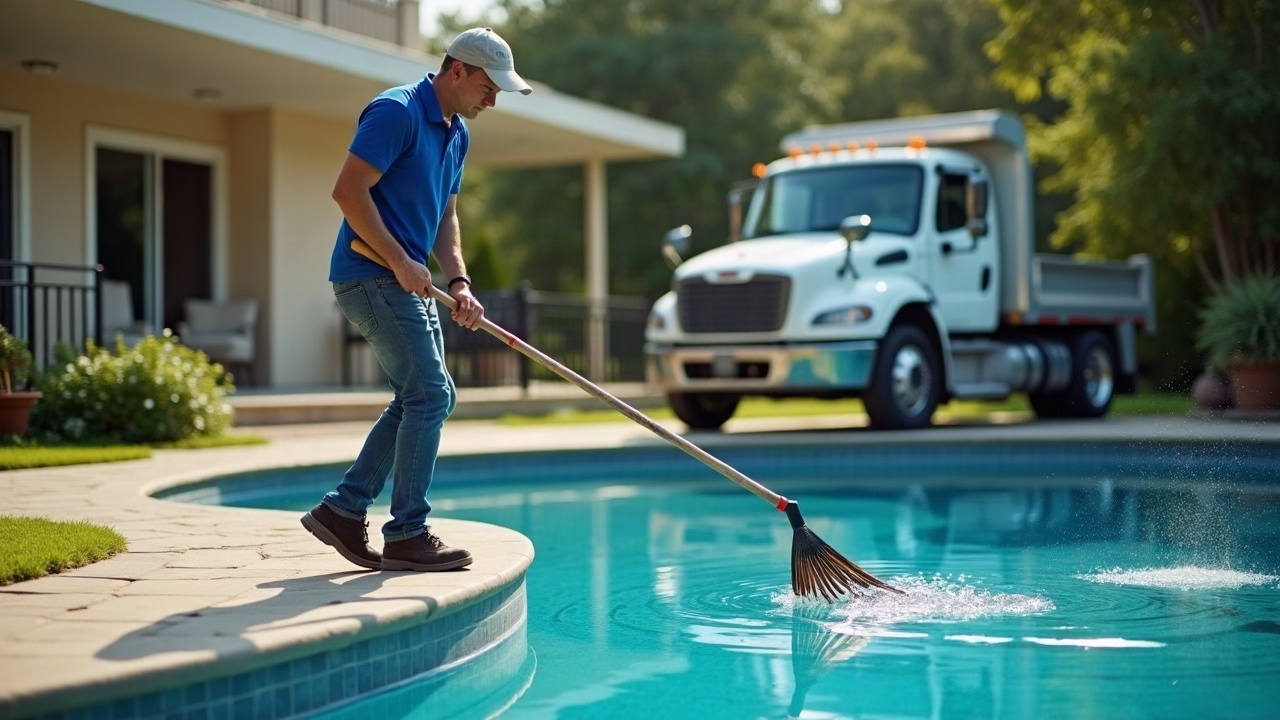
What's the Real Cost of Missing These Calls?
The typical pool service company with 6 technicians and 150-250 maintenance accounts misses approximately 35-50% of inbound calls during peak season. When severe weather strikes on a weekend or evening, that miss rate approaches 90-100% unless the owner personally monitors the phone. At an average value of $500 per storm cleanup call and a conservative estimate of 40 calls per major weather event, a single missed storm costs $20,000 in immediate revenue.
Multiply that across 10 significant weather events per season, factor in the lifetime value of acquired maintenance clients, and the annual cost of not having after-hours call coverage approaches $100,000-250,000 for an established pool service business. For companies trying to scale from owner-operator to a multi-truck operation, missed calls represent the difference between stagnant growth and doubling revenue.
The frustrating reality is that most pool company owners know they're losing calls. They hear the frustration in voicemails from homeowners who called Saturday afternoon about storm damage and booked with someone else by Monday. They see competitors' trucks in neighborhoods they service, responding to emergencies they never heard about. But they don't have a solution that doesn't require hiring full-time staff, learning scheduling software, or personally answering the phone 24/7.
How Do You Capture Storm Calls Without Burning Out?
Capturing swimming pool storm calls requires live answer capability during the exact hours most pool service companies are closed — evenings, weekends, and holidays when severe weather typically occurs. The solution isn't working more hours yourself or hiring a generic answering service that takes messages. You need people who understand pool service, can assess damage based on homeowner descriptions, quote appropriate services, and book appointments with deposit collection.
The most effective approach is a dedicated front office team trained specifically on your services, pricing, and scheduling requirements. This team becomes your after-hours presence, handling everything from initial call answer through appointment booking and payment collection. The homeowner experiences professional, knowledgeable service. You wake up Monday morning to a calendar full of booked, pre-paid emergency calls instead of a voicemail box full of missed opportunities.
For owner-operators running lean teams, this seems financially impossible. A full-time office manager costs $40,000-55,000 annually plus benefits, and still only covers 40 hours per week. The calls you're missing happen during the other 128 hours. Building out true 24/7 coverage with in-house staff would require 4-5 people and six-figure annual payroll.
That's the problem Book All Leads solves differently. Instead of one employee covering limited hours, you get six specialized roles covering all hours — call answering, appointment scheduling, customer follow-up, payment processing, all of it. No software for you to learn because the team manages everything on their end. You're live in 5 days because there's nothing to install or configure. No long-term contracts because the value proves itself immediately when you stop missing calls. Visit our pricing page to see how full front office coverage costs less than a single full-time hire while capturing exponentially more revenue.
Real-World Example: How One Pool Company Turned Storm Season Around
A pool service company in Central Florida — an area experiencing frequent severe weather from May through October — was missing approximately 60% of inbound calls during evening and weekend hours. The owner had tried a generic answering service, but they couldn't answer pool-specific questions, couldn't quote services, and couldn't book appointments. Homeowners would leave messages, the owner would return calls Monday morning, and the work was already booked with competitors.
After implementing dedicated front office coverage, the company's storm-related revenue increased 340% in the first season. Every call got answered live, every homeowner received same-day or next-day appointment options, and deposits were collected at booking to reduce no-shows. More importantly, 68% of storm cleanup clients converted to ongoing maintenance contracts within 90 days.
The owner described the shift as "getting my weekends back while making more money than when I was glued to my phone." The team handling calls had been trained on storm damage assessment questions, knew which scenarios required immediate response versus next-day service, and understood how to present premium pricing in a way homeowners accepted without negotiation. Revenue from storm-related work went from an unpredictable $15,000-20,000 per season to a reliable $70,000-85,000 — and that doesn't include the ongoing value of maintenance contracts.
Frequently Asked Questions
How quickly do I need to respond to storm-related pool calls?
You should answer storm-related pool service calls live when they come in, or return them within 15-30 minutes maximum. Homeowners calling about pool damage after severe weather are in crisis mode and will contact multiple companies rapidly until someone answers. If you wait hours or days to respond, they've already booked with a competitor who picked up the phone. The companies capturing premium storm cleanup work answer live, quote services immediately, and book appointments before the caller hangs up.
What should I charge for emergency storm cleanup?
Emergency storm cleanup should command 1.5x to 2.5x your normal service rates, depending on timing and severity. A standard debris removal that might bill at $150-250 should price at $400-600 as an emergency call. Add expedited service fees ($75-150) for same-day or next-day scheduling, and charge premium rates for weekend or after-hours work. Homeowners experiencing active pool damage aren't price shopping — they're solving an urgent problem and will pay appropriately for fast professional response.
Do storm calls actually convert to long-term maintenance clients?
Yes, storm-acquired customers convert to maintenance contracts at significantly higher rates than customers acquired through advertising or routine inquiries. When you deliver professional, fast service during a homeowner's moment of crisis, you build trust that translates into long-term loyalty. Pool companies report 60-75% conversion rates from emergency storm calls to ongoing maintenance contracts within 90 days, compared to 20-35% conversion from standard marketing leads.
What if I don't have capacity to take on emergency calls during storm events?
Even if your maintenance schedule is fully booked, you should still answer storm calls and schedule them appropriately. Many pool service companies create dedicated "emergency response" time blocks on Thursday afternoons and Saturday mornings specifically for storm cleanup. Others bring in part-time technicians during peak storm season to handle overflow work. The revenue from premium-priced emergency calls often justifies temporary labor costs. Turning away high-value emergency work because you're busy with routine maintenance is a strategic mistake.
How do I train someone to handle pool storm damage calls if they're not a technician?
Train call handlers using damage assessment questions that categorize the problem and match it to your standard service offerings. Create a simple decision tree: debris only = standard cleanup ($400-600), equipment not working = diagnostic visit ($150-250) plus potential repairs, visible structural damage = emergency inspection ($200-300) plus repair estimate, water quality issues = chemistry service ($200-350). The person answering doesn't need to diagnose the exact problem — they need to ask the right questions, quote the appropriate service tier, and book the appointment. Detailed diagnosis happens when your technician arrives.
What's the biggest mistake pool companies make with storm-related calls?
The biggest mistake is treating storm calls like routine maintenance inquiries instead of time-sensitive emergency leads. Pool companies that take messages and return calls on Monday have already lost 80-90% of the available work to competitors who answered live and booked immediately. Storm calls require immediate response, premium pricing, and same-day or next-day scheduling. The second biggest mistake is not collecting deposits at booking — emergency calls have higher no-show rates when homeowners panic-book multiple companies and take whoever arrives first.
Stop Losing Premium Revenue to Competitors Who Just Answer the Phone
Swimming pool storm calls represent the highest-value lead source most pool service companies are completely ignoring. You're not losing to better technicians or lower prices — you're losing to whoever picks up the phone when homeowners call panicked after severe weather. Every missed call is a $500-800 immediate revenue loss plus $2,000-4,000 in lifetime maintenance contract value.
The solution isn't working more hours or hiring expensive full-time staff. You need professional front office coverage during the exact hours storms happen and homeowners call — evenings, weekends, and holidays. A team that answers live, understands pool service, quotes appropriately, books appointments, and collects deposits so you wake up to a calendar full of pre-sold, premium-priced work.
That's exactly what you get with Book All Leads. Six specialized roles covering every call, every hour, every day. No software to learn, no contracts locking you in, live in 5 days. Stop subsidizing your competitors' growth with the calls you're missing. Let's talk about capturing the revenue that's already trying to reach you.
John Edmonds is a native Texan and military combat veteran. He founded Book All Leads after identifying a critical gap in the service industry: business owners losing revenue not from lack of skill, but because no one was handling the calls, follow-ups, reviews, and payments while they were busy doing the work.
View LinkedIn Profile →