
The Real Problem Behind Swimming Pool Water Feature Jobs
Swimming pool water feature jobs—from custom waterfalls to elegant fountains—are slipping away from pool contractors at an alarming rate, and landscapers are scooping them up. The reason isn't better design skills or lower pricing. It's response time and professional presentation. When a homeowner calls about adding a $15,000 waterfall to their existing pool, they're in "serious buyer" mode. The company that answers first, schedules a design consultation immediately, and follows up professionally wins the job. Pool companies assume they're the natural choice for these installs, but that assumption is costing them six figures annually.
Why Are Landscapers Winning Swimming Pool Water Feature Jobs?
Landscapers win swimming pool water feature jobs because they treat inquiries like design projects from the first phone call, while pool contractors treat them like service calls. When a homeowner reaches out about a pool waterfall installation or custom fountain, landscapers typically answer within minutes, ask detailed questions about the homeowner's vision, and book a design consultation within 48 hours. Pool companies, meanwhile, often miss the initial call, return it hours or days later, and approach the conversation transactionally rather than consultatively. This difference in front-office execution costs pool contractors an average of $180,000 per year in lost high-margin water feature work.
The homeowner calling about a waterfall isn't looking for the cheapest option. They've already invested $40,000–$80,000 in their pool. They want someone who understands design, who responds like a professional, and who makes them feel confident about a complex install. When your competitor answers on ring two and your call goes to voicemail, you've already lost—even if you're technically more qualified for the job.
Here's what most articles won't tell you: The pool contractor who loses these jobs usually has better equipment, more experience with plumbing and hydraulics, and tighter integration between the pool system and the water feature. But none of that matters if you don't answer the phone. According to InsideSales.com, leads contacted within five minutes are 21 times more likely to convert than those contacted after 30 minutes. For high-ticket water feature jobs, that window is even narrower—homeowners typically call two to three companies and make a decision based on who impresses them first.
The Waterfall Job You Never Knew You Lost
Consider this scenario: A homeowner in Scottsdale with a five-year-old pool decides she wants a natural stone waterfall with a grotto feature. She saw one at her neighbor's house and got the name of three companies—two pool contractors and one landscaping company that does "outdoor living spaces." She calls all three on a Thursday afternoon.
- Pool Contractor A (you): Phone rings six times, goes to voicemail. Your message says you'll return calls within 24 hours. You're on a job site finishing a replaster. You call her back Friday morning—18 hours later.
- Pool Contractor B: Answers on ring four. The person who picks up sounds rushed, asks her to "send some pictures," and says someone will get back to her with a ballpark price.
- Landscaper C: Answers on ring two. Asks what she loves about the neighbor's waterfall. Books a design consultation for Saturday morning. Sends a text confirmation with a portfolio link.
Guess who gets the job? It's not the contractor with the most experience. It's the one who made her feel like her project mattered in the first three minutes of contact.
What's Actually Happening When You Lose These Jobs
The breakdown happens in three places: call handling, qualification, and follow-up. Most pool companies operate with a field-first mentality. The owner and lead techs are on job sites. The office is either unstaffed, staffed by someone juggling five roles, or staffed by someone who's great at scheduling maintenance but unprepared to handle a design consultation inquiry. When a water feature lead comes in, it gets treated like every other call—captured, returned when there's time, quoted over the phone if possible.
Landscapers, especially those focused on high-end outdoor living, operate differently. They've built their businesses around consultative sales. They expect design inquiries. Their front office (or answering service) is trained to ask discovery questions, express enthusiasm about the project, and book on-site consultations immediately. They send follow-up texts, emails with portfolio examples, and reminders. They treat a $15,000 waterfall inquiry like the revenue opportunity it is.
The financial impact is staggering. The average pool waterfall installation ranges from $8,000 to $25,000, with custom grottos and multi-tier features reaching $40,000 or more. If your company misses or mishandles just one water feature inquiry per month, you're leaving $120,000–$180,000 on the table annually. Multiply that by pool fountain leads, bubbler installations, and other add-ons, and the real number is likely north of $200,000.
The Four Calls That Cost You Six Figures
Let's break down exactly where revenue walks out the door:
The Missed Call (40% of inquiries): Your phone rings during a job. You're elbows-deep in a filter repair. The call goes to voicemail. You call back three hours later. The homeowner has already booked a consultation with someone else.
The Botched Qualification (30% of inquiries): You answer, but the person on your team doesn't know how to handle a design inquiry. They ask the homeowner to "email some photos," or they try to quote a price over the phone without seeing the site. The homeowner feels dismissed.
The Slow Follow-Up (20% of inquiries): You have a good initial conversation, but you don't send a follow-up text or email. You say you'll "put together some ideas" but don't give a timeline. The homeowner starts to wonder if you're really interested.
The Proposal That Never Closes (10% of inquiries): You do everything right up to the proposal, but then you send a PDF and wait. No follow-up call. No check-in. The homeowner ghosts you because a competitor stayed in touch and made it easy to say yes.
The companies that dominate pool waterfall installation and fountain work don't win because they're cheaper or flashier. They win because their front office treats every inquiry like the revenue event it is. That kind of execution doesn't happen by accident—it happens when someone is always available to answer, qualify, and follow up.
This is exactly the gap that Book All Leads was built to close. Instead of hoping your office manager can juggle service calls and high-value design inquiries, you get a full front office team—six roles working around the clock—handling every call, booking every consultation, and following up on every lead. No software to learn, no contracts, live in five days. You stay focused on installs; your team makes sure no water feature lead ever slips through the cracks again.

How to Win Back Pool Waterfall Installation and Fountain Leads
Winning these jobs back requires three operational changes: faster response, consultative call handling, and relentless follow-up. None of this is theoretical. Pool contractors who implement these changes see water feature revenue double within 12 months, often without any increase in marketing spend. You're not trying to generate more leads—you're trying to convert the ones you're already getting and losing.
Step One: Answer Every Call Within Three Rings
This sounds obvious, but most pool companies fail here. If you're in the field, your phone is either on silent, ignored, or answered by someone who isn't trained to handle design inquiries. The fix is simple but requires a decision: either someone on your team is always available to answer and qualified to handle water feature inquiries, or you delegate that role to a team that specializes in it.
The three-ring rule isn't arbitrary. Homeowners expect businesses to answer quickly. When you don't, they assume you're too busy, understaffed, or uninterested. That assumption costs you the job before you even know it existed.
Step Two: Ask Discovery Questions, Not Pricing Questions
When someone calls about a waterfall or fountain, the worst thing you can do is ask "What's your budget?" or try to quote a price on the spot. Instead, your front office should ask:
- What inspired you to add a water feature?
- Have you seen an example you love? (Neighbor, Pinterest, showroom?)
- What's the current setup of your pool? (Size, shape, existing features?)
- Are you thinking about other upgrades at the same time? (Lighting, landscaping, decking?)
- When are you hoping to have this completed?
These questions do two things: they make the homeowner feel heard, and they give you the information you need to position a design consultation instead of a quote. A consultative approach separates you from the "send me a price" competitors and aligns you with how landscapers are already winning.
Step Three: Book the Consultation Before You Hang Up
The goal of the first call is not to close the sale or even to provide a ballpark estimate. The goal is to book an on-site design consultation within 48–72 hours. Your front office should say something like: "I'd love to see your space and talk through what you're envisioning. I have Saturday at 10 a.m. or Monday at 3 p.m.—which works better for you?"
Booking the consultation on the first call increases your close rate by 40–60%. It puts you in the home before your competitors, it demonstrates urgency, and it positions you as the professional who takes their project seriously.
Step Four: Follow Up Immediately and Consistently
After the call, send a confirmation text within five minutes. Include your name, the appointment time, and a link to a portfolio or gallery of past water feature installs. This is where most pool contractors drop the ball—they book the appointment and assume the homeowner will show up. But homeowners are talking to multiple companies, and the one who stays visible wins.
Follow up again the day before the consultation. Send a reminder text and a brief email. After the consultation, send a thank-you message and a timeline for when they'll receive the proposal. After you send the proposal, follow up within 48 hours. According to Bain & Company, increasing customer retention by just 5% can increase profits by 25% to 95%, and consistent follow-up is the single biggest driver of retention and conversion in home services.
Most pool contractors treat follow-up as "nice to have." Landscapers treat it as mandatory. That's the difference.
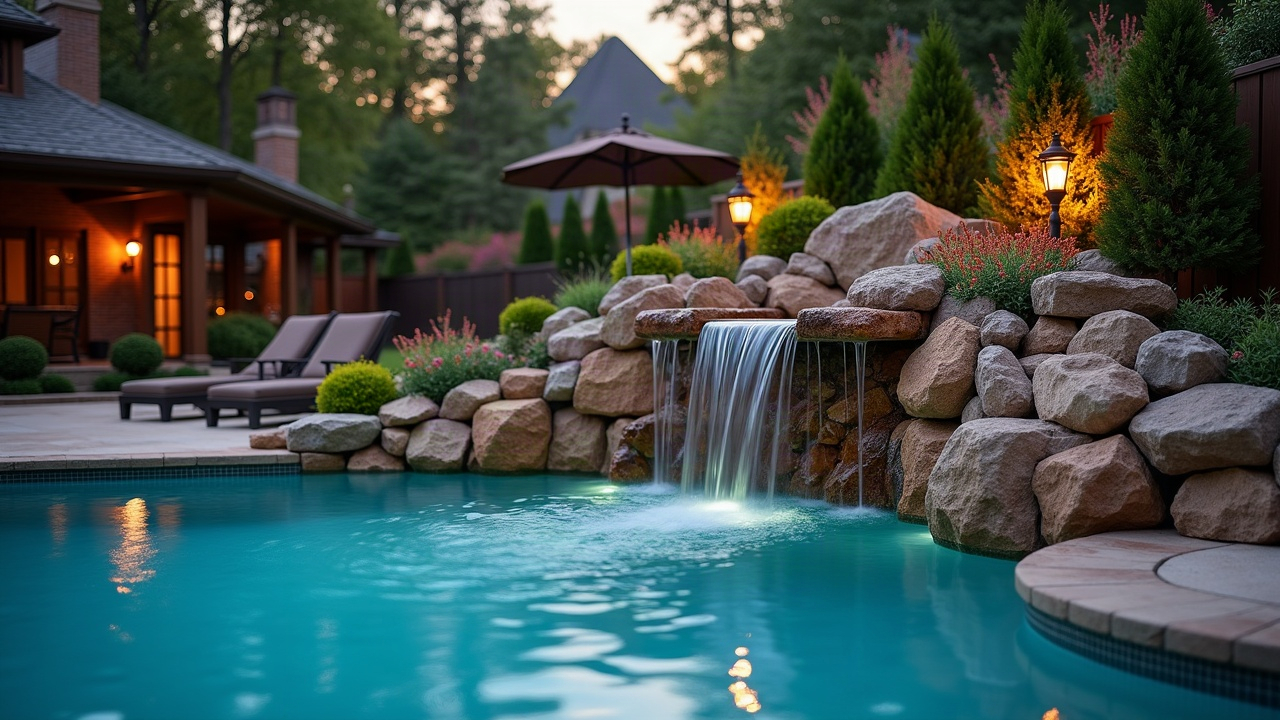
What This Looks Like in Real Revenue
Let's run the numbers. Assume you're a mid-sized pool company doing $1.2 million annually in service, renovation, and new construction. You get roughly 15–20 inquiries per year about water features—waterfalls, fountains, bubblers, spillways, grottos. You close maybe three of them. That's a 15–20% close rate, which is typical for companies without a dedicated front office.
Now assume you implement the changes above: you answer every call, you qualify properly, you book consultations, and you follow up. Your close rate jumps to 50–60%. Instead of closing three jobs, you close nine. At an average ticket of $15,000, that's an additional $90,000 in revenue. Factor in higher-margin custom installs, and that number easily hits $120,000–$150,000.
But there's a multiplier effect. Homeowners who add a waterfall often come back for lighting upgrades, outdoor kitchens, pool automation, and eventually full renovations. According to the National Association of Home Builders, homeowners who invest in high-end outdoor features spend an average of 30% more on related upgrades within two years. That $15,000 waterfall client becomes a $40,000 lifetime client—if you don't lose them to a landscaper in the first phone call.
Calculate What You're Losing Right Now
If you're not sure how much revenue is slipping away, start tracking. For the next 90 days, log every water feature inquiry—how it came in, how quickly you responded, whether you booked a consultation, and whether you closed it. Then calculate your losses based on your current close rate versus a 50% benchmark. Most pool contractors are shocked to discover they're leaving $100,000–$200,000 on the table simply because their front office isn't built to handle design inquiries.
The good news? You don't need to hire three new people or invest in expensive CRM tools. You need someone answering the phone, asking the right questions, booking appointments, and following up. If your current setup can't deliver that, it's time to bring in a team that can.
Stop Losing Water Feature Revenue to Landscapers
Swimming pool water feature jobs should belong to pool contractors. You understand the hydraulics, the equipment, the integration with existing pool systems. You can deliver a better product. But none of that matters if you're not there when the homeowner calls. Landscapers aren't winning because they're better at the work—they're winning because they're better at the business of getting the work.
The fix is operational, not technical. Answer faster. Ask better questions. Book consultations immediately. Follow up relentlessly. These aren't advanced tactics—they're the basics of running a front office that treats every lead like revenue, not an interruption.
If you're ready to stop losing high-margin water feature jobs and start converting the leads you're already getting, it's time to build a front office that works as hard as you do. Book All Leads gives you a full team—six roles, 24/7 coverage, live in five days, no contracts—so you can focus on delivering stunning waterfalls, fountains, and grottos while we make sure every inquiry turns into a booked consultation. Your competitors are already answering faster. It's time you did too.
Frequently Asked Questions
Why do landscapers win so many pool water feature jobs?
Landscapers win because they answer calls faster, treat inquiries as design consultations from the start, and follow up more consistently. They've built their front office around consultative sales, while most pool contractors treat water feature inquiries like service calls. The homeowner's first impression happens in the first three minutes of contact, and landscapers are trained to make that impression count.How much revenue am I losing to missed water feature calls?
Most pool contractors lose $120,000–$200,000 annually in water feature revenue due to missed calls, slow response times, and poor follow-up. If you're getting 15–20 inquiries per year and closing fewer than 30%, you're leaving six figures on the table. Use a simple tracking log for 90 days to see exactly how many opportunities you're missing.What's the average ticket for a pool waterfall installation?
Pool waterfall installations typically range from $8,000 to $25,000, depending on size, materials, and complexity. Custom grottos, multi-tier waterfalls, and features with integrated lighting or fire elements can reach $40,000 or more. These are high-margin jobs, and losing even one per month costs you $100,000+ annually.How fast do I need to respond to water feature inquiries?
You should answer or return calls within five minutes. Research shows that leads contacted within five minutes are 21 times more likely to convert than those contacted after 30 minutes. For high-ticket water feature jobs, the window is even narrower—homeowners often make a decision within hours of their first call based on who responded professionally and quickly.Do I need a dedicated salesperson to handle water feature leads?
Not necessarily. You need someone who can answer every call, ask discovery questions, book on-site consultations, and follow up consistently. That could be a well-trained office manager, a dedicated team member, or a professional front office service. The key is that this role is staffed full-time—not handled by whoever happens to be near the phone.What should I say when a homeowner asks for a price over the phone?
Never quote a price on the first call. Instead, say something like: "Water features can range quite a bit depending on the design and your pool's setup. I'd love to see your space and talk through what you're envisioning. I have Saturday at 10 a.m. or Monday at 3 p.m.—which works better for you?" This positions you as a consultant, not a commodity, and gets you in front of the homeowner before your competitors.John Edmonds is a native Texan and military combat veteran. He founded Book All Leads after identifying a critical gap in the service industry: business owners losing revenue not from lack of skill, but because no one was handling the calls, follow-ups, reviews, and payments while they were busy doing the work.
View LinkedIn Profile →