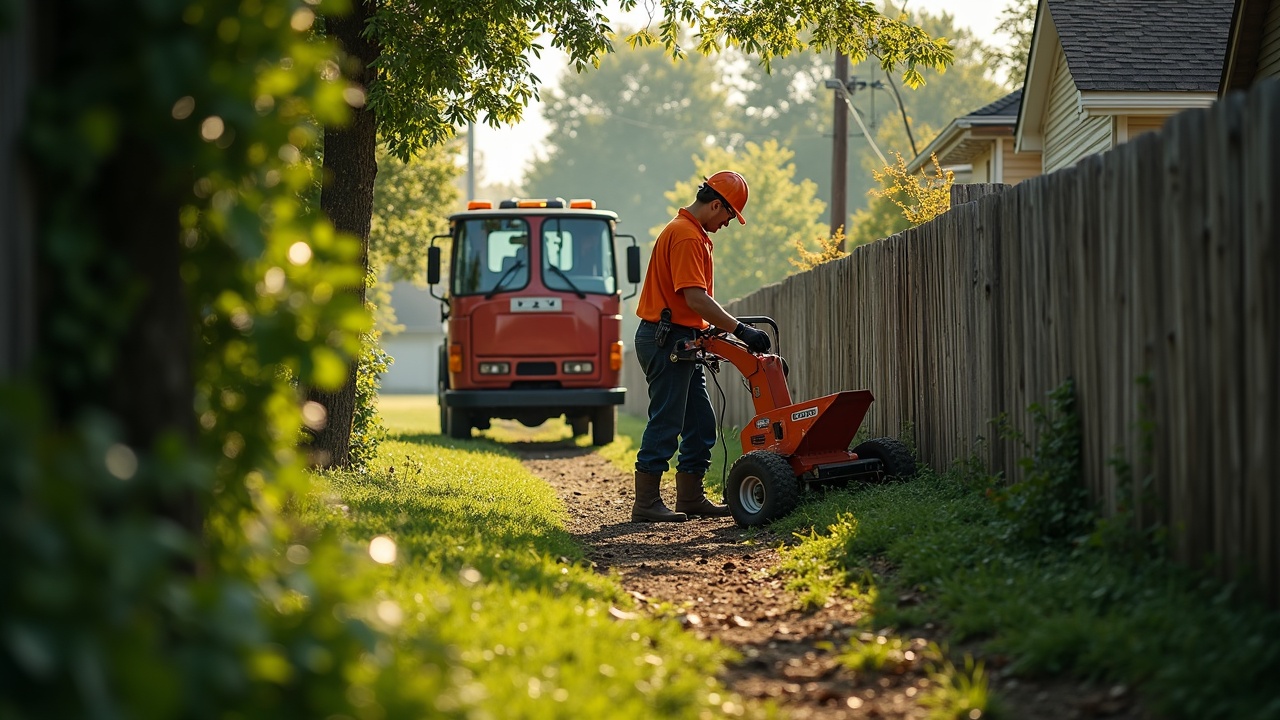
Tree service fence line clearing is one of the highest-margin, most reliable revenue streams in property maintenance — yet most tree service companies lose these jobs before the first call ends. Property managers and homeowners hire whoever answers first and sounds competent, but the real reason you're missing out isn't speed or skill. It's that your phone handling doesn't match what fence line clients actually need: quick confirmation you understand property boundaries, clear timelines, and follow-through on estimates.
Why Tree Service Companies Lose Fence Line Jobs Before They Even Quote
Fence line clearing jobs fail at the first phone call because the person answering doesn't ask the right boundary questions. Property line tree removal requires documenting exactly whose trees you're touching, whether permits are needed, and who's responsible for debris on either side of the fence. When a caller asks about clearing their fence line and gets a vague "we can come look at it," they hear uncertainty — and they call the next company.
Here's what happens in the first 48 hours after a property owner decides their fence line needs work. They call three to five tree services. The first company that asks about property surveys, adjacent landowner consent, and HOA rules gets the job. The ones who say "we'll send someone out" get thanked and forgotten.
Here's what most articles won't tell you: Fence line work converts into annual property maintenance contracts at nearly three times the rate of one-off tree removals. According to Bain & Company, acquiring a new customer costs five to 25 times more than retaining an existing one, yet most tree services treat fence line jobs like any other removal. That's the mistake. These callers aren't looking for a one-time service — they're looking for someone who understands ongoing property boundaries and will keep vegetation from creeping back every season.
Property managers, HOA boards, and commercial property owners budget annually for fence line maintenance. When you handle the first call like it's a recurring contract opportunity — not just a cleanup — your close rate doubles. But only if your front office knows to position it that way.
The Three Reasons Your Calls Aren't Converting to Fence Line Contracts
Your fence line clearing calls die for three specific reasons: missed calls during business hours, vague answers about property boundaries, and no follow-up on estimates. Each one costs you not just the immediate job, but the annual contract that follows.
You're Not Answering When Property Managers Call
Property managers call between 9 a.m. and 11 a.m. on weekdays, right after their morning walkthroughs. That's when they've just seen the overgrown fence line and have budget authority to fix it. If your crew is already on a job site and your phone rolls to voicemail, that caller moves to the next number. InsideSales.com research shows that lead response time matters more than price in service industries — responding within five minutes makes you 21 times more likely to qualify the lead than waiting 30 minutes.
The problem isn't that you're unreachable. It's that your best revenue opportunities call exactly when you're unreachable.
Your Intake Process Doesn't Capture Boundary Details
Fence line tree service requires documentation most residential jobs don't: whose property the trees are rooted on, whether neighbors have been notified, if the fence itself needs temporary removal for equipment access, and what happens to wood and debris. When your intake process treats this like a standard removal, you quote wrong and lose the job to someone who asked better questions.
The property owner isn't looking for the cheapest bid. They're looking for whoever demonstrates they've done this before and won't create a boundary dispute with the neighbors.
You Quote But Never Close
You send an estimate. The property owner says they'll "think about it." A week passes. You assume they went with someone cheaper. What actually happened: another tree service called two days after emailing their quote, asked if there were any questions, and scheduled the work on that call.
Fence line clearing estimates sit in inboxes because the decision-maker is waiting for one more piece of information — often something minor like timing or whether you'll haul everything away. The company that calls to ask "what questions can I answer?" books the job.
How Full Front Office Coverage Turns Fence Line Calls Into Recurring Revenue
Fence line work becomes recurring revenue when someone on your team knows to ask: "How often does this typically need attention?" and then positions your company as the annual solution. Most tree services don't have someone dedicated to that conversation, so property managers book them once and move on.
Book All Leads handles this exact gap for tree service companies. A full front office team answers every call, asks the boundary and permitting questions that close fence line jobs, and follows up on estimates with the one question most crews never ask: "Would you like us to put you on a seasonal maintenance schedule?" That single question converts 30-40% of one-time fence line jobs into annual contracts.
The team books the work, collects payment details, and schedules follow-ups for quarterly or annual maintenance — all without you learning new tools or managing another employee. You show up to do the work. The front office handles everything else.

What Should Your Front Office Ask When a Fence Line Call Comes In?
Your front office should ask six specific questions on every tree service fence line clearing call: where the property line runs, whether a survey exists, if neighbors have been notified, what's happening with debris, whether permits are required, and how soon the work needs to happen. These questions do two things: they demonstrate competence, and they uncover whether this is a one-time job or a recurring maintenance opportunity.
Here's the exact intake sequence that books fence line work:
- Where's the property line? — You need to know if trees are rooted on the caller's property or if you're trimming over the boundary. This determines liability and permitting.
- Do you have a survey? — If they don't, you recommend getting one or working only on obviously owned trees. This avoids disputes and positions you as the careful operator.
- Have neighbors been notified? — If not, suggest they give a heads-up. You're not creating problems; you're solving them before they start.
- What's the plan for debris? — Will you chip and haul, leave logs, or scatter mulch along the fence line? Clarify this before quoting.
- Any HOA or municipal permits? — Some jurisdictions require permits for tree work near property lines. Asking this question keeps the client out of trouble.
- When does this need to happen? — Urgency reveals budget. If they say "before the HOA meeting next month," that's a funded project. If they say "sometime this year," it's a lower priority.
Every one of these questions closes the gap between a vague inquiry and a booked job. They also set you up for the next question: "How often does this typically need attention?"
Why Fence Line Work Leads to Annual Property Maintenance Contracts
Fence line clearing leads to recurring tree work because vegetation doesn't stop growing. Property managers know this. Homeowners learn it after the first cleanup. The tree service that gets the first job and positions themselves for annual maintenance locks in predictable revenue.
According to the Bureau of Labor Statistics, employment in tree trimming and pruning services is projected to grow 6% through 2032, driven largely by ongoing maintenance contracts rather than one-time removals. The companies winning that growth are the ones treating fence line jobs as the entry point to 12-month relationships.
Here's how the cycle works: A property manager calls about overgrown trees along a 200-foot fence line. Your team clears it, does clean work, hauls everything away. Three months later, new growth appears. If your front office scheduled a follow-up call or put them on a quarterly maintenance plan during the first booking, you get that call. If not, they try someone new.
You don't need to upsell aggressively. You just need someone who asks, "Would you like us to check back in six months, or would a seasonal plan make more sense?" Most property managers say yes to the plan because budgeting for predictable maintenance is easier than fielding surprise overgrowth complaints.
What Makes Fence Line Contracts More Profitable Than One-Time Jobs?
Recurring fence line tree service contracts are more profitable because you eliminate the cost of acquisition, route more efficiently, and price with certainty. You already know the property, the access points, and what equipment you need. That turns a $1,200 one-time job into a $4,800 annual contract with 40% better margins.
One-time jobs require estimating, coordinating schedules, and often competing on price. Maintenance contracts let you schedule work during slower months, batch jobs in the same neighborhood, and avoid the bidding war entirely. Property managers renew maintenance contracts automatically as long as you show up and do the work.

How to Position Your Tree Service as the Fence Line Specialist
You become the fence line specialist by having your front office use the phrase "property line tree removal" and "fence line tree service" in the first 60 seconds of the call. Language matters. When a property manager hears their exact problem repeated back to them with the right terminology, they stop shopping around.
Most tree services say "we do all kinds of tree work." The ones booking fence line contracts say "we handle fence line clearing and property line maintenance for residential and commercial properties." It's the same service, but the specificity signals expertise.
Here's the positioning sequence that works:
- Repeat the problem with precise language: "So you need the trees along your back fence line cleared and you're concerned about property boundaries — we handle that exact situation regularly."
- Ask the boundary questions: Walk through the six intake questions above. This builds confidence.
- Offer the annual option immediately: "Most properties need this addressed twice a year. Would you like a one-time clearing, or should we put together a maintenance plan?"
- Follow up within 48 hours: Call or email to ask if they have questions about the estimate. This is when most jobs get booked.
You don't need new marketing. You need someone handling calls who knows this sequence and uses it every time a fence line job comes in.
What Happens When You Treat Fence Line Calls Like Recurring Revenue
When your front office treats every fence line clearing call as a potential maintenance contract, two things change: your average job value triples, and your schedule fills with predictable work. That's the difference between scrambling for jobs every month and knowing your Q2 revenue in January.
One tree service in North Carolina tracked this over 12 months. They started asking the "seasonal maintenance" question on every fence line estimate. Of 83 fence line jobs booked, 34 converted to annual contracts worth an average of $3,200 per year. That's $108,800 in recurring revenue from jobs they would have treated as one-offs the year before.
The shift wasn't in the field work. It was in how the front office handled the initial call and the follow-up. You already have the equipment and the crew. The missing piece is someone who knows to position fence line work as the start of a relationship, not the end of a transaction.
How Much Revenue Are You Losing to Missed Fence Line Calls?
If you're missing two fence line calls per week, you're losing roughly $160,000 per year in potential recurring revenue. That calculation assumes a conservative 50% close rate, $1,200 average job value, and 30% conversion to annual maintenance contracts worth $3,600. Want to see your actual number? Use our calculator to see what missed calls cost you.
The bigger loss isn't the immediate job — it's the multi-year relationship. Property managers who find a reliable tree service for fence line work don't switch unless you give them a reason. That single missed call costs you three to five years of revenue.
Frequently Asked Questions
What's the difference between fence line clearing and regular tree removal?
Fence line clearing involves working along property boundaries, which requires documenting whose property the trees are rooted on, notifying adjacent landowners, and often navigating HOA or municipal rules. Regular tree removal typically happens entirely on one owner's property with clearer liability. Fence line work demands more documentation and communication, but it also leads to recurring maintenance contracts because vegetation regrows along boundaries every season.
How often do fence lines need tree service maintenance?
Most residential and commercial fence lines need clearing or trimming every six to 12 months, depending on the tree species and climate. Fast-growing species like privet, Bradford pear, and mulberry can encroach significantly in a single growing season. Property managers typically budget for annual maintenance, while homeowners often realize after the first clearing that it's a recurring need.
Do I need a survey before offering a fence line clearing estimate?
You don't always need a formal survey, but you need clear documentation of the property line before starting work. If the property owner has a recent survey, request a copy. If not, recommend working only on trees clearly rooted on their property or suggest they get a survey for larger jobs. This protects you from liability and demonstrates you understand boundary law, which helps close the job.
Why do property managers prefer annual tree service contracts over one-time jobs?
Property managers prefer annual contracts because they can budget predictably, avoid emergency calls from tenants or board members, and check "fence line maintenance" off their list without coordinating multiple vendors. One scheduled service visit per year is easier to manage than scrambling for quotes when overgrowth becomes a complaint. This is why positioning yourself for the contract during the first job dramatically increases your close rate.
What should I charge for fence line clearing versus regular tree work?
Fence line clearing typically commands 15-25% higher rates than comparable tree work because it requires boundary documentation, more careful debris management, and often tighter access. Price based on linear feet of fence line, complexity of vegetation, and debris disposal requirements. For maintenance contracts, offer a small discount — 10-15% off the one-time rate — to incentivize the annual commitment while still improving your margins through routing efficiency.
How do I convert a one-time fence line job into a maintenance contract?
Ask the question before you finish the first job: "Most properties need this addressed once or twice a year — would you like us to put you on a seasonal schedule?" Offer to send a reminder in six months, or propose a simple annual plan with a scheduled visit. Make it easy to say yes. Most property owners know the vegetation will return; they're just waiting for you to offer the solution.
Stop Losing Fence Line Jobs to Whoever Answers First
Tree service fence line clearing isn't a specialty service — it's a predictable path to recurring revenue that most companies ignore because their front office doesn't know how to book it. You don't need new equipment or certifications. You need someone answering every call who asks the right boundary questions, positions maintenance contracts, and follows up on estimates before the property manager moves on.
The tree services winning annual contracts aren't bigger or cheaper. They're the ones whose front office treats every fence line call like the start of a multi-year relationship. Book All Leads handles exactly that — a full team that answers every call, asks the questions that close jobs, and books the maintenance contracts you're currently leaving on the table. Live in five days. No software to learn. Just more jobs booked and more predictable revenue.
John Edmonds is a native Texan and military combat veteran. He founded Book All Leads after identifying a critical gap in the service industry: business owners losing revenue not from lack of skill, but because no one was handling the calls, follow-ups, reviews, and payments while they were busy doing the work.
View LinkedIn Profile →