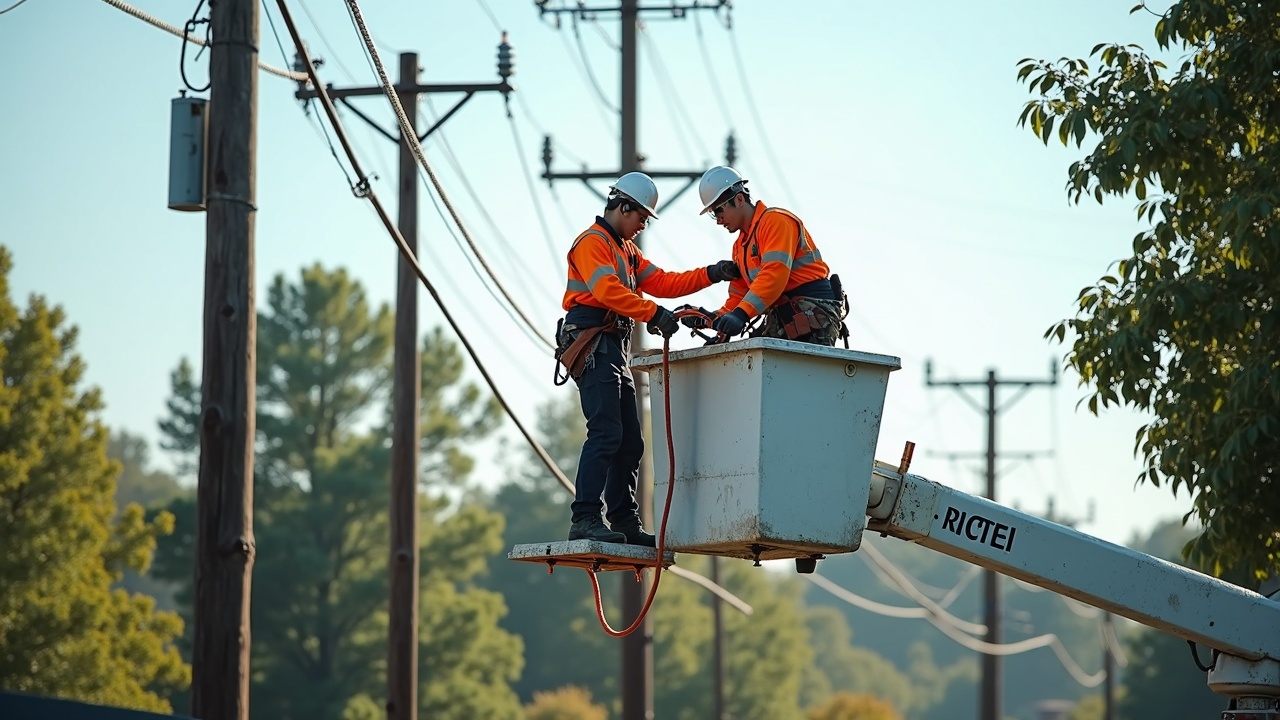
Tree service utility contracts fail most often because contractors miss critical calls during bid windows, lack documentation of safety certifications when RFPs are due, and can't staff 24/7 emergency response lines that utility companies require. Winning and keeping utility line clearance work means proving you can answer every call within minutes, document every interaction for compliance audits, and mobilize crews for storm emergencies at 2 AM—capabilities most tree service companies lose the moment they grow past five trucks.
The utility and municipal contract market represents the most stable revenue stream in the tree service industry. While residential work fluctuates with seasons and economic conditions, utility companies need vegetation management year-round. But here's the frustrating reality: most tree service companies that land their first utility contract lose it within 18 months—not because their crews can't do the work, but because their front office can't keep up with the operational demands.
Why Do Tree Service Companies Lose Utility Line Clearance Contracts?
Tree service companies lose utility line clearance contracts because they fail compliance documentation requirements, miss emergency response calls that trigger penalty clauses, and can't provide the call logging and incident tracking that utility clients audit quarterly. The contracts themselves are rarely lost due to poor fieldwork—utility managers terminate agreements when contractors can't prove response times, maintain required certifications in accessible databases, or staff phones during mandated availability windows.
Here's what most articles won't tell you: Utility companies don't just want good tree work. They need legally defensible documentation that proves you responded within contractual timeframes, dispatched qualified crews, and followed safety protocols. When a homeowner calls their utility company complaining about branches near lines, that utility needs to show regulators they contacted their vegetation management contractor within 2 hours and received confirmation of a scheduled appointment. If your front office missed that call or didn't log it properly, you've created liability—even if your crews would have done the work perfectly.
According to InsideSales.com, response times beyond 5 minutes reduce conversion rates by 400% in commercial service contracts. For utility work, the stakes are higher: many ROW tree service agreements include financial penalties for calls not returned within 1-2 hours during business days and 30 minutes during declared emergencies.
The Documentation Gap That Kills Renewals
Utility companies operate under intense regulatory scrutiny. When they're audited by public utility commissions or face litigation after storm damage, they pull their vegetation management records. They need timestamped proof of:
- When they notified you of a hazard or service request
- Your documented response time and crew assignment
- Completion verification with before/after photo documentation
- Current certification status of crew members who performed the work
- Customer communication logs if property owners were involved
Most tree service owners keep this information scattered across text messages, voicemails, handwritten notes, and crew leader memories. When the utility sends their quarterly compliance audit request, assembling this documentation takes days of frantic searching—if it exists at all.
What Makes Winning Tree Service Municipal Contracts Different From Residential Work?
Winning tree service municipal contracts requires formal RFP responses with detailed safety programs, proof of bonding and insurance that exceeds residential requirements, reference lists from other government entities, and commitment to prevailing wage compliance and certified payroll reporting. The bidding process alone demands capabilities most residential-focused tree services don't have—technical writing for proposals, financial documentation proving company stability, and established protocols for things like traffic control plans and public notification procedures.
Municipal work operates on a completely different timeline than residential tree service. A homeowner calls, you give them a quote, they say yes or no. A municipality publishes an RFP with a 30-day window, requires a site visit during specific hours, demands a 50-page proposal with specific formatting, and makes a decision 60-90 days later in a public meeting.
During that RFP window, you'll likely receive clarification requests and addendums. If your office doesn't catch these emails or phone calls, you submit an incomplete proposal and get disqualified before anyone even looks at your pricing. According to Bureau of Labor Statistics data, the tree service industry employs over 140,000 workers nationwide, but fewer than 12% of companies hold active municipal or utility contracts—not because they can't do the work, but because they can't manage the administrative requirements.

The Hidden Cost of Missed RFP Communications
Here's a real example: A tree service company in Oregon spent $8,000 preparing a proposal for a 3-year municipal contract worth $240,000 annually. They submitted on time, met all requirements, and had competitive pricing. Two weeks after submission, the city's procurement office called with a clarification question about their safety training program. The call came at 11 AM on a Tuesday. The owner was running a job, his office manager was out sick, and the call went to voicemail.
The procurement officer left a message requesting a response by end of business that day to remain in consideration. The owner didn't check messages until 6 PM. He called back first thing Wednesday morning. The city had already disqualified them for non-responsiveness and moved forward with the remaining bidders. That missed call cost them a $720,000 contract opportunity.
How Can Small Tree Service Companies Compete for Commercial Accounts?
Small tree service companies compete for commercial accounts by building front office capabilities that match their field expertise—specifically, dedicated phone coverage during all business hours, organized documentation of certifications and insurance, systematic proposal tracking, and professional call handling that reassures commercial buyers they're dealing with a reliable contractor. The competitive advantage isn't crew size or equipment; it's operational reliability that large commercial and government clients can depend on.
Most tree service owners think they need to hire an office manager and invest in expensive software to handle commercial work. That's one path, but it's slow and expensive. You're looking at $45,000-65,000 annually for a skilled office manager, plus months of training them on tree service specifics, utility contract requirements, and municipal procurement processes. And you still have coverage gaps when they're sick, on vacation, or simply overwhelmed during storm season when emergency calls spike.
The faster solution is what companies like Book All Leads provide: a complete front office team handling calls, tracking proposals, maintaining compliance documentation, and ensuring every utility or municipal contact gets professional response within minutes. Your crew expertise stays in the field where it generates revenue. Your front office becomes the reliable administrative backbone that commercial clients require—without hiring, training, or managing office staff.
Building Your Safety and Compliance Documentation
Commercial clients want immediate access to current certificates, not promises to email them later. Your front office needs organized, instantly accessible records of:
- ISA Certified Arborist credentials with current wallet cards and expiration dates
- EHAP (Electrical Hazard Awareness Program) certifications for all utility crews
- Current general liability and workers compensation certificates with municipality listed as additional insured
- Equipment inspection records and proof of proper maintenance
- OSHA 10 or 30-hour training completion for crew leaders
When a utility company calls to verify your crew's qualifications before approving a sensitive job near high-voltage lines, they need answers in minutes, not days. The company that can confirm "Yes, our crew leader is ISA Certified Arborist #SO-7834A, current through March 2026, and completed EHAP training in January 2024" wins the work over the competitor who says "I'll have to check and call you back."
What Do Utility Companies Actually Want in Line Clearance Contractors?
Utility companies want line clearance contractors who provide guaranteed emergency response within contractual timeframes (typically 1-2 hours), maintain detailed work logs that satisfy regulatory audits, carry appropriate insurance with the utility listed as additional insured, and staff dedicated phone lines that answer 24/7 during storm season. The technical tree work is table stakes—every qualified bidder can prune to ANSI A300 standards. Contracts go to companies that prove operational reliability through documented responsiveness and compliance tracking.
Talk to any utility vegetation manager and they'll tell you the same thing: their biggest frustration isn't finding tree crews who can do the work safely. It's finding contractors who answer their phones, return calls promptly, provide accurate ETAs, and maintain the documentation that keeps the utility compliant with Public Utility Commission regulations.
The Emergency Response Reality
Utility line clearance work includes emergency callouts for storm damage, fallen trees on lines, and hazard trees identified during inspections. These aren't schedule-at-your-convenience jobs. When a tree takes down a distribution line and 200 homes lose power, the utility needs a crew dispatched immediately—and they need confirmation of that dispatch logged in their incident management database.
Most tree service companies can mobilize crews quickly. Where they fail is the communication loop. The utility calls at 11 PM during a windstorm. The owner's phone is dying because he's been coordinating crews all day. The call goes to voicemail. The utility moves to their backup contractor who answered. You lose not just that emergency call, but consideration for future contracts because you proved unreliable when it mattered most.
How Do You Price Tree Service Utility Contracts Competitively?
Price tree service utility contracts by calculating your fully-loaded hourly costs including labor, equipment, insurance, and compliance overhead, then adding margin based on contract terms—typically 18-25% for routine maintenance contracts and 35-50% for emergency response agreements. The key mistake contractors make is underbidding by failing to account for administrative costs like call handling, documentation, reporting, and the staffing required to meet response time guarantees. According to research from Bain & Company, companies that accurately cost their operational overhead maintain 20-30% higher margins on commercial contracts than those who price based only on direct field costs.
Here's a specific example: A routine maintenance contract requires quarterly inspections and clearance work along 50 miles of distribution lines. Your field calculation shows 320 crew hours at $85/hour = $27,200 per quarter. But the contract also requires:
- A dedicated phone line answered within 3 rings during business hours
- Monthly compliance reporting with photo documentation
- 2-hour guaranteed response to urgent hazard calls
- Quarterly in-person meetings with utility vegetation managers
These administrative requirements add real costs. If you're not accounting for them, you win the contract and lose money delivering it. You need to calculate your losses from missed calls and administrative overhead before submitting utility bids, or you'll discover six months in that you're working for break-even or less.
The Response Time Cost Most Contractors Miss
When you guarantee 1-2 hour response times, you're committing to staffing that makes it possible. That means someone monitoring the phone, able to reach crew leaders, check schedules, and provide definitive answers during all contracted hours. For storm season, that often means 24/7 coverage.
If you hire for this, you're adding $35,000-55,000 annually for professional call handling during business hours, plus on-call coverage. If you try to handle it yourself, you're taking yourself away from running jobs, managing crews, and doing the work that actually generates revenue. Either way, there's a real cost that needs to be in your pricing.
What Are the Most Common Reasons Utility Contracts Get Terminated?
Utility contracts get terminated most often for missed response time requirements, incomplete or late compliance reporting, insurance lapses or failure to maintain required coverage levels, and repeated customer complaints about crew behavior or property damage. Actual tree work quality ranks lower on the termination list than operational failures—utilities build penalty clauses and termination rights around administrative compliance because that's what creates legal and regulatory risk for them.
In a review of contract terminations across three regional utilities in the Pacific Northwest, response time failures accounted for 42% of contractor terminations, documentation and reporting issues represented 31%, and insurance or certification lapses made up 18%. Actual work quality issues—poor pruning, safety violations, or damage—accounted for only 9% of terminations, because utilities screen heavily for technical competence before awarding contracts.
The lesson: you can be the best tree crew in your state and still lose utility contracts if your front office can't keep up with the administrative demands.
How Can Tree Service Companies Build Long-Term Relationships With Municipal Clients?
Build long-term municipal relationships by exceeding response time commitments, providing proactive communication about potential issues before clients discover them, maintaining meticulous documentation that makes their audit and reporting easier, and assigning a dedicated point of contact who builds personal relationships with municipal staff. Municipalities value reliability and ease of doing business over the lowest bid—once you're in as a trusted vendor, contracts renew almost automatically if you perform consistently and make their jobs easier.
Municipal contract renewals often happen without re-bidding, through simple contract extensions or direct awards under existing purchasing agreements. But this only happens when you've proven yourself reliable. The parks director or city forester who recommends renewing your contract is staking their professional reputation on your performance. They need confidence you won't make them look bad by missing calls, showing up late, or failing to document work properly when the city council asks for reports.
The Proactive Communication Advantage
Here's what sets apart contractors who build decade-long municipal relationships: they call the city before the city has to call them. When your crew is working in a park and notices three additional hazard trees beyond the original scope, you don't just add them to the invoice. Your office calls the parks department the same day, explains what was found, provides a cost estimate for addressing it, and asks how they'd like to proceed.
This simple habit—proactive communication about scope changes, potential issues, and schedule updates—builds trust faster than anything else. It requires a front office that understands your work well enough to have intelligent conversations with municipal clients, not just take messages and relay them.
Frequently Asked Questions
How long does it take to win your first utility line clearance contract?
Most tree service companies spend 6-18 months from initial contact to contract award for utility line clearance work. The timeline includes relationship building with utility vegetation managers, prequalification paperwork including safety program review and insurance verification, observation periods where utilities evaluate your work on small projects, and then formal bidding on larger contracts. Companies with established municipal references and documented safety programs move faster. The key is starting relationship development before you need the work, not when you're trying to fill schedule gaps.
What insurance coverage do utility companies typically require?
Utility line clearance contracts typically require general liability insurance of $2-5 million per occurrence, workers compensation coverage meeting state requirements, commercial auto insurance of $1-2 million, and umbrella coverage of $5-10 million. You'll need the utility company listed as additional insured on your general liability policy, and many require 30-day notice of cancellation clauses. Some utilities also require professional liability coverage if you're providing consulting services like tree risk assessments. These insurance requirements are significantly higher than typical residential work, and you need current certificates immediately accessible when contracts are awarded.
Can a small tree service company with 3-5 employees handle utility contracts?
Yes, small tree service companies can successfully manage utility contracts if they have the right front office support to handle compliance documentation, emergency response communication, and relationship management. Utility companies care more about reliability, safety records, and responsiveness than company size. Many utilities actually prefer working with multiple smaller contractors over single large providers because it gives them flexibility and backup options. The challenge for small companies isn't field capability—it's maintaining professional office operations that meet utility expectations. Solving the front office piece makes utility work accessible even for smaller operators.
What certifications matter most for winning utility line clearance work?
ISA Certified Arborist credentials and EHAP (Electrical Hazard Awareness Program) certification are the two most important credentials for utility line clearance work. Many utilities require at least one ISA Certified Arborist on staff and EHAP certification for any crew member working within 10 feet of energized lines. Additional valuable certifications include ISA Utility Specialist credential, CTSP (Certified Treecare Safety Professional), and OSHA 30-hour training for supervisors. Having these credentials is only valuable if your front office can immediately verify current status when utility clients request documentation—certifications don't help you win work if you can't prove you have them when asked.
How do municipalities typically structure tree service contracts?
Municipalities structure tree service contracts either as on-call agreements with unit pricing for specific tasks, annual maintenance contracts with fixed pricing for defined scope, or emergency response contracts with hourly rates and guaranteed response times. Many cities use a combination—an annual contract for routine maintenance in parks and along streets, plus an on-call emergency agreement for storm response. Contract terms typically run 1-3 years with optional renewal periods. Pricing is usually based on detailed unit costs (price per tree removed by diameter class, price per linear foot of pruning, hourly rates for different crew configurations) rather than lump sum pricing. This allows municipalities to scale services up or down based on budget availability while maintaining predictable costs.
What's the biggest mistake tree service companies make when pursuing commercial contracts?
The biggest mistake is treating commercial and utility contracts like residential work with bigger numbers. Tree service owners assume that if they can handle the tree work technically, they can handle the contract. They underestimate the administrative demands—the call volume during emergencies, the documentation requirements, the compliance reporting, and the relationship management that commercial clients expect. They win a contract based on competitive pricing and field capability, then discover their office can't keep up with response time requirements, reporting deadlines, and communication expectations. The contract becomes a burden instead of a profit center, and they either lose it at renewal or decide commercial work isn't worth the hassle. The fix is building front office capability that matches field capability before pursuing large contracts.
Stop Losing Contracts to Administrative Failures
You didn't build your tree service company to spend your evenings assembling compliance reports and chasing down certification expiration dates. You built it because you're excellent at managing complex tree work safely and efficiently. But utility and municipal clients don't just buy tree expertise—they buy operational reliability.
The tree service companies winning recurring utility line clearance contracts and building long-term municipal relationships aren't necessarily the biggest or the cheapest. They're the ones who answer every call within minutes, maintain documentation that satisfies audits, and make their clients' jobs easier through proactive communication and professional front office operations.
If you're ready to compete for high-margin tree service utility contracts without hiring office staff or learning new software, Book All Leads provides the complete front office team that makes commercial and municipal clients confident in your reliability. You focus on the tree work that built your reputation. We handle everything else—live in 5 days, no contracts, just outcomes.
John Edmonds is a native Texan and military combat veteran. He founded Book All Leads after identifying a critical gap in the service industry: business owners losing revenue not from lack of skill, but because no one was handling the calls, follow-ups, reviews, and payments while they were busy doing the work.
View LinkedIn Profile →