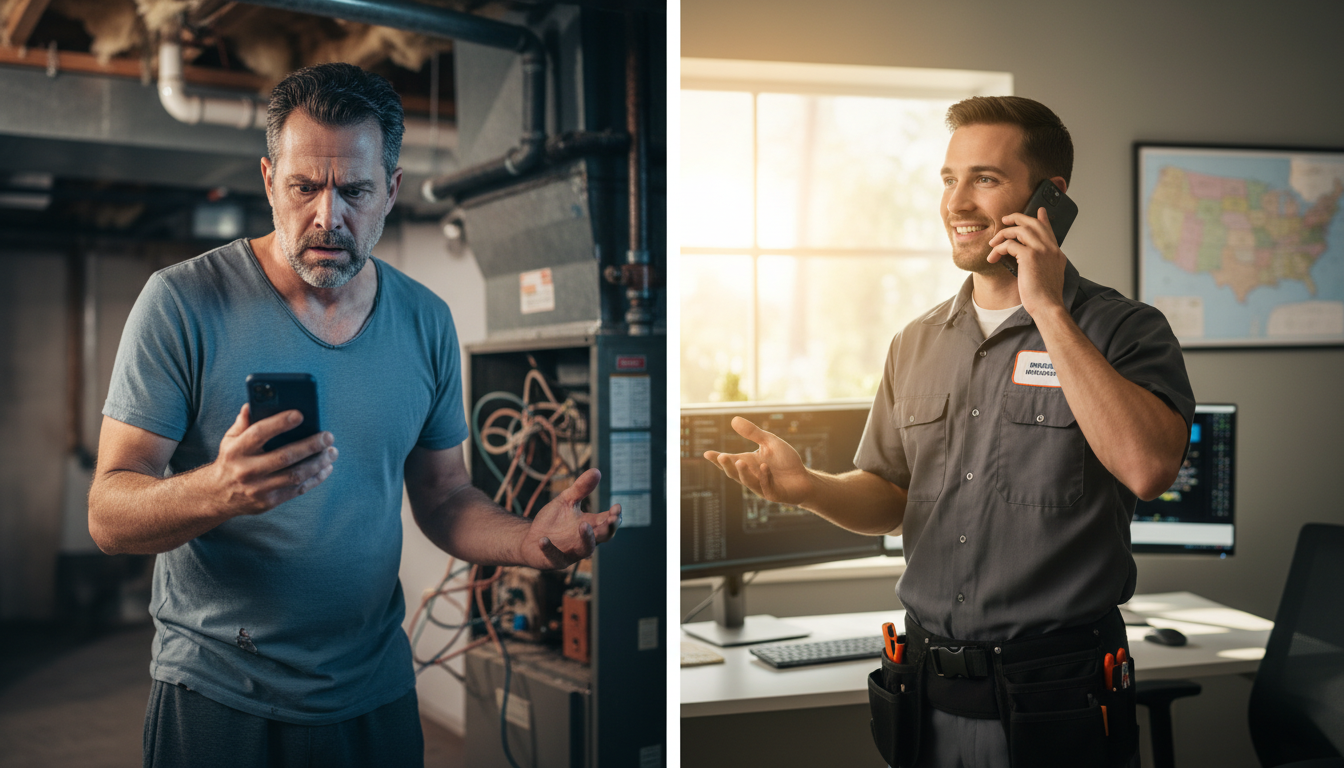
HVAC customer acquisition fails most often in the first five minutes after a homeowner calls. When your phone rings and no one answers—or when a caller hears "I'll have someone call you back"—you've just handed a paying customer to the competitor who picks up. Speed isn't a niceness. It's the single biggest factor separating HVAC companies that grow from those that wonder where their leads went.
The Problem: Your Leads Are Calling Your Competitors While You're on the Job
Here's what happens when a homeowner's air conditioner quits on a 92-degree afternoon: they Google "AC repair near me," open three browser tabs, and start dialing. The first company that answers—and can book them today—gets the job. The rest get nothing.
You already know this. You've watched calls roll to voicemail because you're elbow-deep in a compressor swap. You've called people back twenty minutes later only to hear "we already found someone." What you might not realize is how fast you're losing. According to InsideSales.com, your odds of qualifying a lead drop by 400% if you wait longer than five minutes to respond. In HVAC, where emergency calls dominate summer revenue, five minutes might as well be five hours.
The math is brutal. If you're averaging a 15-minute callback time and your competitor answers live in under 30 seconds, they're winning 60-70% of the head-to-head contests. You're not losing because your pricing is wrong or your trucks aren't clean. You're losing because someone else said "hello" first.
Why Fast Response Time Wins HVAC Jobs
Speed to answer creates perceived competence and immediate trust. When a homeowner reaches a live person within seconds, they stop calling other companies. The urgency that made them pick up the phone in the first place gets resolved, and the psychological need to keep searching disappears.
This isn't about being pushy. It's about being present when the decision is happening. Research from Harvard Business Review shows that companies who contact potential customers within an hour are seven times more likely to qualify the lead than those who wait even 60 minutes. In HVAC, where discomfort drives urgency, that window is even tighter.
Here's what most articles won't tell you: The homeowner who leaves a voicemail isn't waiting for you to call back. They've already moved to the next name on the list. The "lead" you think you have doesn't exist anymore. By the time you return the call, they've already said yes to someone else, and now you're interrupting a done deal. Your voicemail box isn't a lead pipeline—it's a graveyard of lost revenue.
Why Voicemail Feels Like Rejection to Homeowners
When someone calls an HVAC company, they're usually uncomfortable, stressed, or both. Hearing a voicemail greeting signals "you're not important enough for us to pick up." Even if that's not true—even if you're busy serving another customer—the caller doesn't know that. They assume you're too busy to help them, so they move on.
Competitors who answer live every time don't just book more jobs. They book the best jobs—the ones where price matters less than availability and trust.
What Happens When You're Always the First to Answer
When every call gets answered by a real person within three rings, your HVAC customer acquisition changes overnight. Homeowners stop shopping. They stop comparing. They describe their problem, hear "we can be there this afternoon," and the transaction is essentially closed.
One HVAC company in Phoenix tracked this exactly. Before hiring a front office team to handle calls, their lead-to-booking rate sat at 34%. Callbacks averaged 18 minutes. After switching to live answer within 30 seconds, their booking rate jumped to 61% within the first month. Same market. Same pricing. Same trucks. The only variable that changed was who picked up the phone.
That's the hidden edge in HVAC: being reachable isn't a customer service upgrade—it's a competitive weapon. While other contractors are returning calls between jobs, you're already on the schedule. While they're playing phone tag, you're collecting deposits.
If you're tired of losing revenue to voicemail, a managed front office team solves it without you learning new software or hiring in-house staff. BookAllLeads runs your entire front desk—six roles working around the clock to answer calls, book jobs, and collect payments. You're live in five days, no contracts, and you never touch a dashboard. It's a team, not a tool.
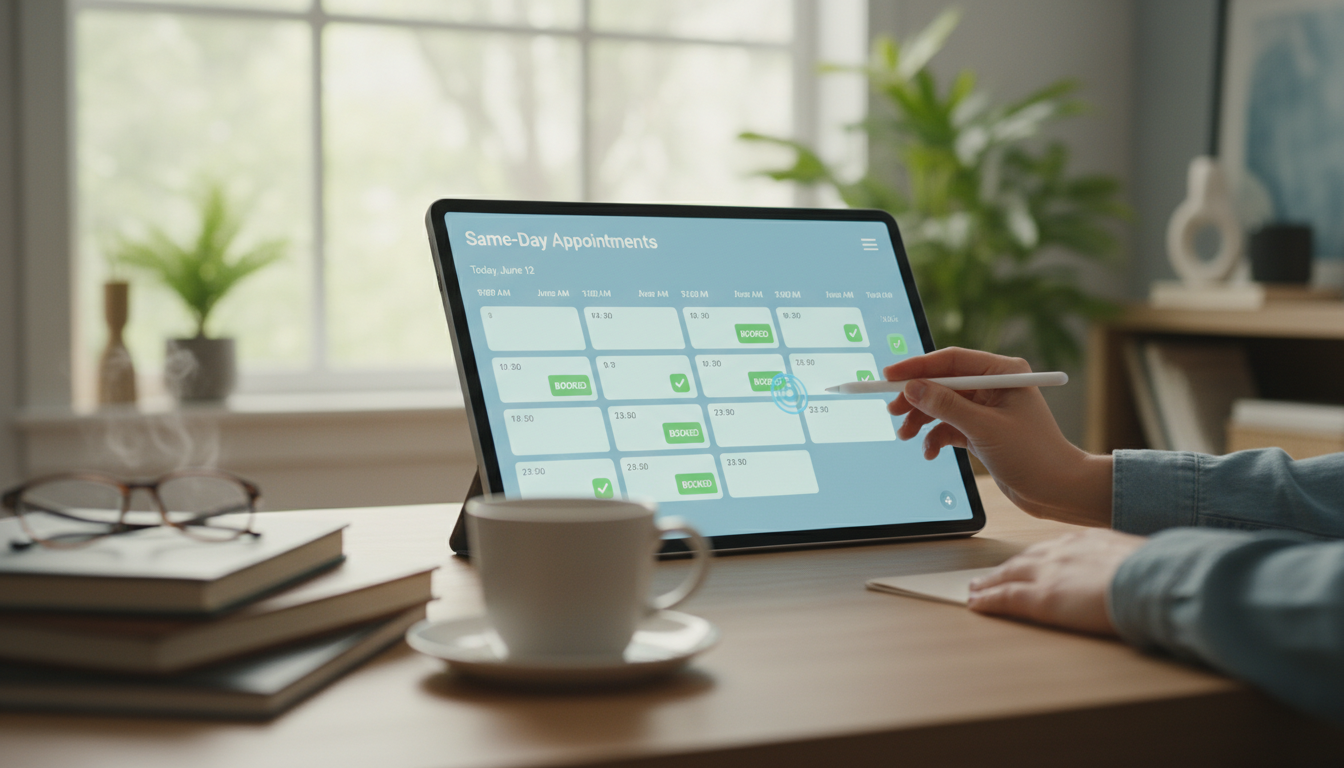
How Much Revenue You're Losing to Slow Response Times
Let's make this concrete. If you're getting 40 inbound calls per week during peak season and missing or delaying 15 of them, you're losing roughly 9-12 booked jobs per week. At an average service call value of $450 and a typical conversion rate of 65% for live-answer calls versus 28% for callbacks, the math looks like this:
| Scenario | Calls Answered Live | Booking Rate | Jobs Booked | Weekly Revenue |
|---|---|---|---|---|
| Current (missed/delayed calls) | 25 | 34% | 8.5 | $3,825 |
| Every call answered live | 40 | 61% | 24.4 | $10,980 |
| Lost Revenue | — | — | 15.9 | $7,155/week |
Over a 20-week cooling season, that's $143,100 in missed revenue—not from lack of demand, but from lack of availability when the phone rang. You can calculate your losses based on your actual call volume and average ticket.
According to the Air Conditioning Contractors of America (ACCA), the average HVAC contractor converts about 35% of inbound leads to booked jobs. The top quartile—companies that prioritize live answer and fast booking—convert closer to 65%. The difference isn't better marketing. It's operational execution at the front desk.
The Compounding Cost of Callbacks
Returning calls doesn't just lower your booking rate—it eats your time. Every callback takes 4-6 minutes of your day: pulling over, finding the number, leaving another message or playing phone tag, documenting what happened. Multiply that by 15 missed calls per week, and you're spending 90 minutes per week chasing people who've already hired someone else.
That's 30 hours per cooling season spent on unproductive follow-up. Time you could've spent on the tools, closing estimates, or going home on time.
Why "I'll Call Them Back" Doesn't Work in HVAC
The callback strategy fails because HVAC buying behavior is immediate and urgent. When a homeowner calls about a broken AC unit in July, they're not researching—they're buying. The decision cycle is measured in minutes, not days.
You've probably tried solutions already. Maybe you hired a call center and got generic agents who couldn't answer basic HVAC questions. Maybe you tried an answering service that took messages but didn't book anything. Maybe you even brought on a part-time office person who works 9-to-5 while your calls spike at 7 PM.
None of these solve the core problem: you need someone who knows your business, can check your schedule, can answer pricing questions, and can close the caller into a booked appointment—every time, 24/7.
The companies winning on HVAC call response time aren't working harder. They've removed themselves from the phone entirely and put a trained team in place that does nothing but answer, qualify, and book.
What It Takes to Actually Answer Every Call
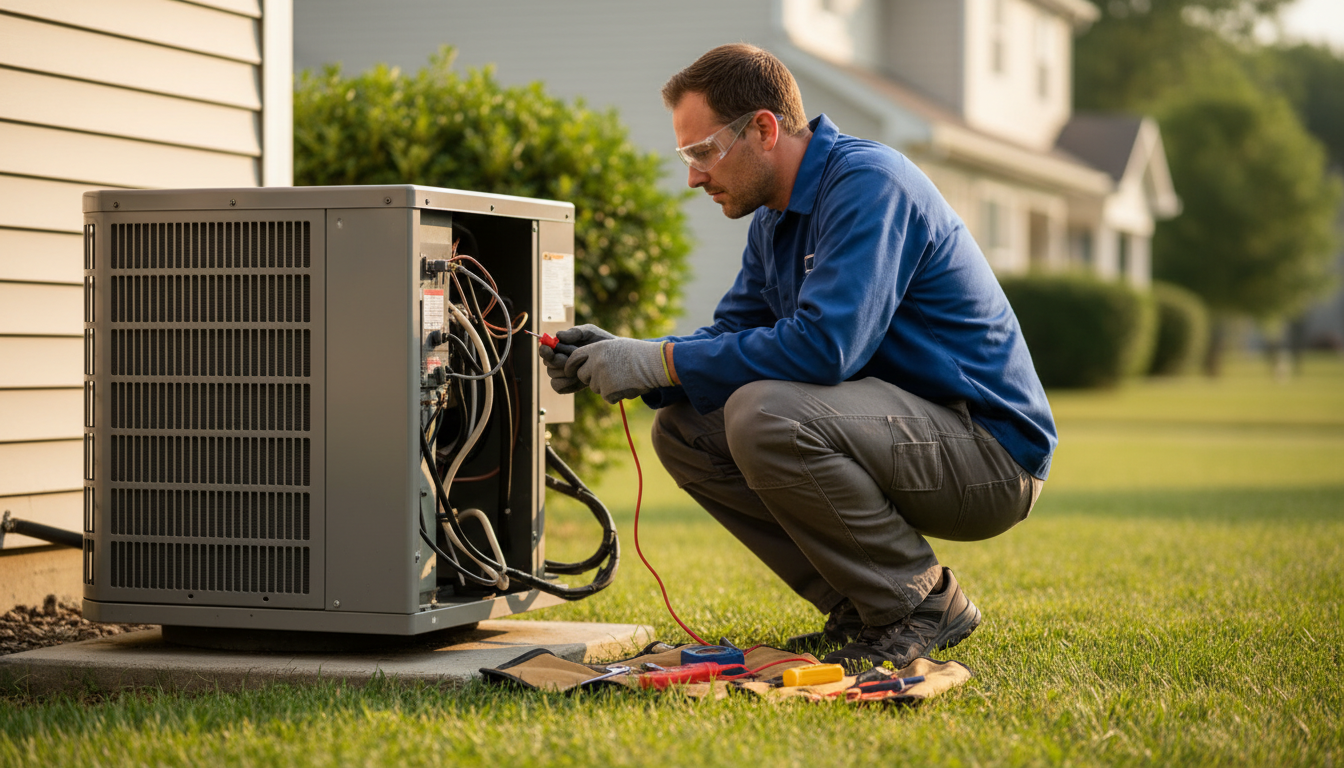
Answering every call live requires coverage, training, and integration with your schedule. It's not a part-time receptionist. It's a full front office operation running in parallel with your field work.
Here's what that looks like in practice:
- Live answer in under 30 seconds, 24/7/365: Nights, weekends, holidays—whenever the phone rings, a real person who knows your pricing and availability picks up.
- Qualification and booking on the first call: The person answering doesn't just take a message. They ask the right questions, check your calendar, quote pricing, and get the job on the books.
- Payment collection upfront: For service calls and deposits, your front office collects payment during booking so you show up to paid work.
- Coordination with your field team: Your front desk updates schedules, sends reminders, handles reschedules, and keeps everyone in sync without you playing middleman.
Most HVAC companies can't build this in-house. Hiring, training, and managing a full front office team costs $180K-$240K per year in payroll alone, and you still don't get 24/7 coverage. The alternative—duct-taping together an answering service, a scheduling app, and a payment processor—creates gaps where leads leak out.
How Top HVAC Companies Stay Ahead on Booking Speed
The HVAC companies growing fastest right now treat front office operations like field operations: they staff it properly, measure performance, and optimize for speed. They know that HVAC competitor advantage isn't won with bigger ad budgets—it's won in the 15 seconds between when the phone rings and when someone says "thank you for calling."
These companies track metrics most contractors ignore:
- Average speed to answer (goal: under 20 seconds)
- Percentage of calls answered live (goal: 98%+)
- First-call booking rate (goal: 60%+)
- Payment collected at booking (goal: 85%+)
When you measure these, you stop leaving revenue to chance. You see exactly where competitors are beating you, and you fix it.
The Role of After-Hours Availability
A significant portion of HVAC emergency calls come outside business hours. According to service industry research, nearly 40% of HVAC service requests happen after 6 PM or on weekends. If your phone rolls to voicemail after hours, you're missing the highest-intent, highest-urgency calls—the ones where price objections disappear.
Competitors offering true 24/7 booking don't just capture more leads. They capture better leads.
What to Do Right Now
Start by tracking how many inbound calls you're actually getting and how many you're answering live within 60 seconds. Most HVAC contractors are shocked when they see the real numbers. If you're missing more than 10% of calls, you're leaving five figures on the table every month.
Next, decide whether you're going to fix this in-house or hand it to a team built for it. In-house means hiring, training, covering PTO and sick days, and managing performance. Outsourced means you're up and running this week with no overhead.
The companies that grow aren't the ones with the best technicians or the flashiest trucks. They're the ones that make it easy to become a customer. And that starts with picking up the phone.
Frequently Asked Questions
How fast do I really need to answer calls to win HVAC jobs?
Answer within 30 seconds to maximize booking rates. Research shows that response times beyond five minutes reduce your chance of winning the job by 400%. In HVAC, where urgency drives most calls, answering live in the first few rings stops the homeowner from calling your competitors.
What's the average booking rate for HVAC companies that answer live versus callback?
HVAC companies that answer calls live typically book 60-65% of inbound leads. Companies relying on callbacks see booking rates around 28-35%. The difference comes down to timing—by the time you call back, the homeowner has often already booked with a competitor who answered immediately.
Can an answering service actually book HVAC jobs, or do they just take messages?
Traditional answering services only take messages. A properly trained front office team can check your schedule, quote pricing, answer common service questions, and book the job on the first call. The key is whether the team is trained specifically on your business and empowered to close appointments, not just log information.
How much revenue do HVAC companies lose by not answering after-hours calls?
If 40% of HVAC emergency calls happen after 6 PM or on weekends and you're missing those calls, you're losing roughly 40% of your highest-intent leads. For a company averaging $30K/week in service revenue, that's $12K per week walking away because no one picked up the phone.
Is it worth hiring a full-time receptionist just to answer HVAC calls?
A full-time receptionist costs $35K-$45K per year and only covers 40 hours per week. You still miss nights, weekends, lunch breaks, and PTO days. A managed front office team costs less, covers 24/7, and includes booking, payment collection, and scheduling—not just answering.
What's the biggest mistake HVAC contractors make with inbound calls?
Assuming the caller will wait for a callback. Homeowners in distress don't wait—they move to the next company immediately. Treating inbound calls like a follow-up task instead of live sales opportunities is the fastest way to hand jobs to competitors who understand urgency.
Stop Losing Jobs You Should Be Winning
HVAC customer acquisition isn't complicated. The homeowner calls, you answer, you book the job. But if you're on a ladder or under a unit when the phone rings, that simple transaction never happens—and your competitor gets the revenue instead.
You can keep doing what you're doing and hope your callbacks improve. Or you can remove yourself from the equation entirely and let a team built for this handle every call, every booking, and every payment. No software to learn. No staff to manage. Just a front office that works while you do.
Learn how BookAllLeads AI Business Team can handle every call, follow-up, and booking while you focus on the work only you can do.
John Edmonds is a native Texan and military combat veteran. He founded Book All Leads after identifying a critical gap in the service industry: business owners losing revenue not from lack of skill, but because no one was handling the calls, follow-ups, reviews, and payments while they were busy doing the work.
View LinkedIn Profile →