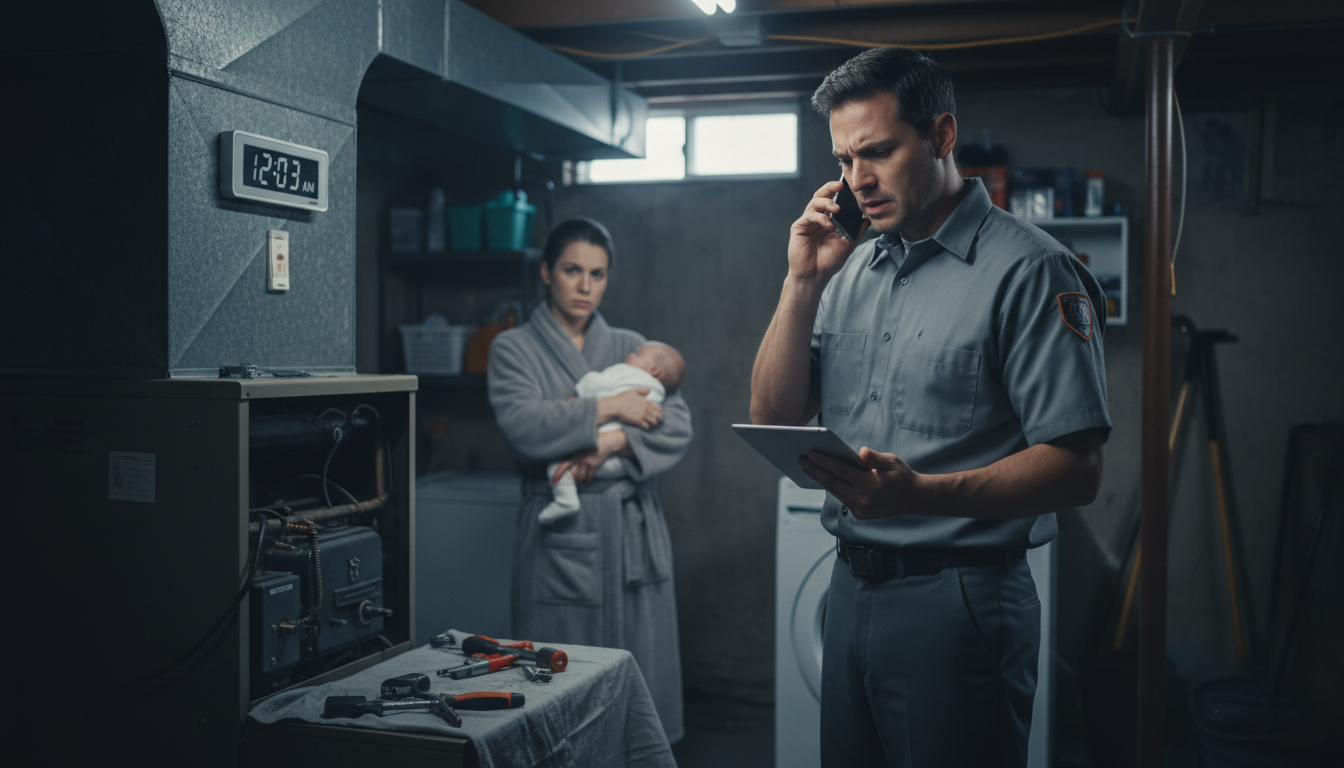
HVAC emergency calls generate 2-3x the revenue of standard service calls, but most companies miss 60-80% of them because they come after hours when no one's answering. When a homeowner calls at 9 PM with a broken furnace in January or a dead AC in July, they're not leaving voicemails—they're calling the next company on the list. The contractor who answers first books the job, often at premium rates, while everyone else loses thousands in same-day revenue they never knew existed.
The Problem: Your Most Profitable Calls Come When You're Not Answering
Emergency HVAC calls happen when systems fail, and systems fail outside business hours. According to the Air Conditioning Contractors of America (ACCA), approximately 67% of residential HVAC emergencies occur between 6 PM and 8 AM or on weekends—precisely when most companies have rolled calls to voicemail.
Here's what that looks like in real dollars: A no-heat call in winter books at $400-900 for the emergency visit alone, before repairs. A failed AC in summer? Same premium. If your market has even 50,000 homes and you're getting 5-8 emergency calls per week during peak seasons, you're looking at $8,000-$15,000 monthly in emergency revenue alone.
But only if you answer.
When you don't, your competitor does. A study by InsideSales.com found that lead response time drops conversion rates dramatically after just five minutes. For emergency calls, that window is even tighter. A homeowner with a broken furnace and two kids in the house isn't waiting—they're dialing down Google's first page until someone picks up.
Why HVAC Companies Miss Emergency Calls After Hours
The after-hours problem isn't laziness or poor planning. It's structural. Most HVAC owners run lean operations where everyone who could answer a phone is either on a job site, driving between calls, or legitimately off-duty after working a 12-hour day. The phone rings. No one's available. The call goes to voicemail. The homeowner hangs up and dials the next number.
The On-Call Rotation Trap
Many companies try rotating on-call duties among technicians or office staff. This creates three problems immediately: First, whoever's on call resents it because it destroys their evening and weekend. Second, tired people make mistakes—they mishear addresses, quote wrong prices, or sound annoyed, which kills the customer experience. Third, your best technician stuck answering phones at 11 PM isn't out on a call generating revenue.
Here's what most articles won't tell you: On-call rotation doesn't just hurt morale—it actively costs you bookings. When a stressed technician who's been working since 6 AM answers an emergency call at 10 PM, they're not selling. They're not enthusiastic. They're getting through it. Homeowners hear that tone and keep calling. Your competitor with a professional answering team sounds ready, capable, and eager for the work. Guess who books the job?
The Voicemail Black Hole
Some owners roll after-hours calls to voicemail with a promise to "call back first thing in the morning." By morning, 80% of those callers have already booked someone else. Emergency calls don't wait. A burst pipe doesn't care about your business hours. A family sweating through a 95-degree night because their AC died isn't going to wait 10 hours for a callback when the next company answers live.
What Happens When You Actually Answer HVAC Emergency Calls 24/7
When you answer every emergency call live, three things happen immediately: You book the job at premium rates while competitors sleep. You build a reputation as the reliable company that's always available, which generates daytime referrals. And you capture customer relationships that turn into maintenance contracts, replacements, and referrals worth $3,000-$8,000 over a customer lifetime.
Let's put real numbers on it. If your market generates 200 residential HVAC emergencies per month during peak season and you capture just 10% by being the first to answer after hours, that's 20 jobs. At an average emergency call value of $600, that's $12,000 monthly in revenue that didn't exist before. Annually, that's $144,000—and that's conservative, because it doesn't count the follow-on work, maintenance agreements, or referrals.
According to research from Harvard Business Review, acquiring a new customer costs 5-25x more than retaining an existing one, and increasing retention by just 5% can increase profits by 25-95%. When you answer an emergency call at 2 AM and solve someone's crisis, you're not just booking one job—you're likely creating a customer for life.
The Competitive Advantage of Always Being Available
Here's the math your competitors haven't done: Most HVAC companies in your market are missing the same after-hours calls you are. They're all fighting over the same daytime service calls while completely ignoring a revenue stream that's less competitive and more profitable. When you become the company that answers at 9 PM on a Saturday, you're not competing against 15 other companies. You're competing against two or three—and most of them are using overworked technicians on rotation who sound like they'd rather be anywhere else.
That perception gap matters. When a homeowner compares the friendly, professional voice who answered immediately and offered a technician within two hours against the exhausted-sounding person who answered on the fifth ring and said "maybe tomorrow morning," the choice is obvious.
How to Actually Capture After Hours HVAC Calls Without Burning Out Your Team
The solution isn't working longer hours or guilt-tripping your team into answering phones at midnight. It's structuring your front office so calls get answered professionally 24/7 without you or your team being involved. That means having dedicated people whose only job is answering your phones, booking your jobs, and handling your customer conversations—people who aren't exhausted from crawling through attics all day.
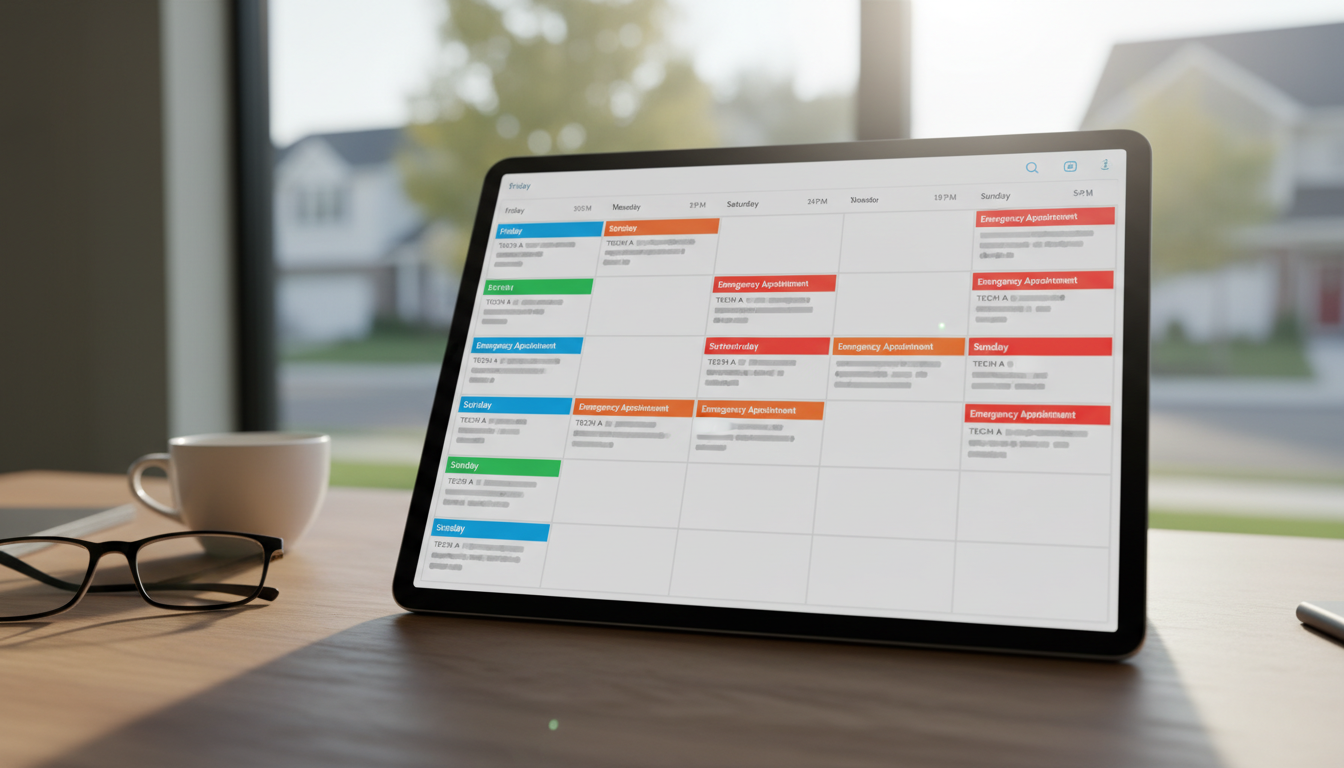
BookAllLeads functions as your entire front office team—six roles working around the clock to answer every call, qualify leads, book appointments into your calendar, and follow up with customers. There's no software for you to learn, no complicated setup, and you're live in five days. Your phones get answered by people who sound fresh and professional at 2 AM because that's their shift, not an interruption to their sleep. When an emergency call comes in, it's answered within three rings, the customer's details are captured, and the job is booked directly into your schedule with all the information your technician needs to show up ready.
Building an Emergency Service Booking Process That Converts
Answering the phone is step one. Converting the call into a booked job is where most companies fall apart. The caller is stressed, possibly angry, definitely in a hurry. Your response has to be fast, confident, and complete. That means:
- Answer within three rings. Every additional ring increases the chance they hang up and dial the next number.
- Acknowledge the emergency immediately. "I understand—a broken furnace with kids in the house is serious. Let's get someone out to you tonight."
- Quote timing, not vague promises. "We can have a technician there within two hours" beats "We'll get someone out as soon as possible."
- Confirm the appointment details twice. Repeat the address, time window, and callback number. Emergencies create stress, and stressed people mishear things.
- Send a confirmation immediately. Text or email confirmation with technician name, arrival window, and your callback number. This reduces no-shows and builds trust.
Pricing Emergency Calls to Reflect Their Value
Emergency calls cost more to deliver. You're dispatching a technician outside normal hours, often interrupting their evening or weekend. Your pricing should reflect that. Most HVAC companies charge a premium of $100-$300 for after-hours emergency service on top of standard diagnostic fees. That premium isn't gouging—it's covering real costs and rewarding availability.
Customers calling at 10 PM expect to pay more. They're not price shopping at that point. They're problem-solving. When your front office quotes the emergency fee confidently and ties it to fast response—"Our emergency service fee is $150, and we'll have someone there within 90 minutes"—most people say yes immediately because the alternative is suffering through the night and trying again in the morning.
Turning Emergency Calls Into Long-Term HVAC On-Call Revenue
The immediate revenue from emergency calls is obvious, but the compounding value is where smart HVAC owners build wealth. A homeowner who calls you in a panic at midnight and gets immediate, professional help doesn't forget that experience. When their system needs replacement two years later, who do they call? When their neighbor asks for a recommendation, whose name comes up?
This is where emergency service becomes a customer acquisition channel that feeds your entire business. According to Bain & Company, a 5% increase in customer retention correlates with at least a 25% increase in profit. Emergency calls give you the chance to create loyal customers during high-stress moments when your reliability matters most.
After every emergency call, your follow-up process should include:
- Next-day check-in. A quick call or text asking if everything's still working builds goodwill and catches any issues before they escalate.
- Maintenance agreement offer. "We're glad we could help last night. Would you like to schedule a seasonal tune-up so this doesn't happen again?" Conversion rates on maintenance agreements offered after emergency service run 40-60% because the pain is fresh.
- Referral request. Happy emergency customers refer at higher rates than standard service customers because the emotional relief is stronger. Ask explicitly: "If you know anyone else who needs reliable HVAC service, we'd appreciate the referral."
What You're Actually Losing When Emergency Calls Go Unanswered
Let's calculate your losses. If your market has 50,000 homes and even 2% experience an HVAC emergency annually that occurs after hours, that's 1,000 calls. If you're currently capturing zero of them because your phones aren't answered, and the average emergency call is worth $600, you're missing $600,000 in annual revenue that's being distributed among the handful of competitors who do answer.
If you could capture just 5% of those calls—50 jobs—that's $30,000 annually. At 10%, it's $60,000. These aren't hypothetical numbers. They're real jobs happening in your market right now, being booked by whoever answers first.
Beyond the immediate revenue, you're losing the customer relationship. Every emergency call you miss is a customer relationship your competitor gains. That customer will likely spend $3,000-$8,000 with that competitor over the next decade through maintenance, repairs, replacements, and referrals. Multiply that by 50 or 100 missed calls per year, and you're not just losing this year's revenue—you're losing the next decade's.
Real-World Example: How One HVAC Company Went From Missing Calls to 24/7 Bookings
A residential HVAC company in North Carolina was doing $1.2M annually but plateaued. The owner knew they were missing calls but assumed it was a daytime problem—too many calls coming in while the office manager was on the other line or at lunch. He added a second office person. Revenue didn't move.
When he finally tracked when calls were coming in, he discovered that 40% of missed calls happened after 5 PM or on weekends. During a heat wave in July, they missed 23 calls in one weekend—every single one a no-cooling emergency. At an average value of $650 per emergency call, that was nearly $15,000 lost in three days.
He switched to a 24/7 answering team that integrated with his existing scheduling system. Within the first month, they booked 18 after-hours emergency calls they would have previously missed—$11,700 in revenue that didn't exist before. Over the next six months, after-hours emergency calls added $68,000 to top-line revenue. But the compounding effect was bigger: 12 of those emergency customers signed maintenance agreements worth $3,600 annually, and referrals from those satisfied emergency customers generated another $22,000 in work.
The total impact of answering after-hours calls: $90,000+ in the first six months, with ongoing revenue from contracts and referrals. The cost of the answering team? A fraction of one missed emergency call per week.
Why Most HVAC Answering Services Don't Actually Solve the Problem
Many HVAC companies have tried answering services and been disappointed. The reason is simple: most answering services are designed to take messages, not book jobs. The person answering your call at 11 PM reads from a script, captures a name and number, and promises someone will call back. That's not solving the customer's problem, and it's not booking your job.
A real front office team does more than answer. They qualify the lead, understand the urgency, quote pricing, check your technician availability, book the appointment into your calendar, send confirmation, and follow up if the customer doesn't answer. That's the difference between a message service and a revenue-generating front office.
The other common failure: services that require you to manage complicated software, update availability manually, or train your team on new systems. If it takes more than five minutes of your time per week, it's not actually solving the problem—it's just shifting the work.
Frequently Asked Questions About HVAC Emergency Calls
How much should I charge for after-hours HVAC emergency calls?
Most HVAC companies charge a $100-$300 emergency service fee on top of standard diagnostic and repair costs for calls outside normal business hours. This premium covers the real cost of dispatching technicians evenings and weekends and reflects the value of immediate availability. Customers calling at 10 PM expect to pay more and rarely object when the fee is quoted confidently alongside a specific arrival time.
What percentage of HVAC emergency calls convert to booked jobs?
When answered live by a trained team, emergency calls convert at 75-85% because the caller has an urgent problem and is ready to pay for immediate help. Calls that go to voicemail convert at under 20% because most callers book with the next company who answers. The speed and quality of your initial response directly determines conversion rates.
Do I need my technicians on call to handle emergency HVAC calls?
No. You need someone to answer the phone, qualify the call, and book the appointment—that doesn't require technical expertise. Your technicians should only be contacted once a job is confirmed and booked, with all customer details ready. Using technicians to answer phones burns them out, costs you productivity, and delivers a worse customer experience than a dedicated front office team.
How quickly do I need to answer HVAC emergency calls to book the job?
Answer within three rings or under 15 seconds. Research from InsideSales.com shows that response time dramatically affects conversion, and for emergency calls, the window is even tighter. A homeowner with a broken furnace in winter is calling multiple companies simultaneously. Whoever answers first and offers the fastest arrival time usually books the job.
Can emergency calls really generate long-term customers, or are they one-time transactions?
Emergency customers convert to long-term relationships at higher rates than standard service customers because you helped them during a crisis. Follow-up with a next-day check-in and maintenance agreement offer typically converts 40-60% of emergency customers into contract clients. Over a decade, that emergency customer is worth $3,000-$8,000 in repeat business and referrals.
What's the biggest mistake HVAC companies make with after-hours calls?
Treating after-hours calls as an inconvenience instead of a premium revenue opportunity. When owners rotate on-call duties among burned-out staff or let calls go to voicemail, they're actively rejecting their most profitable work. Emergency calls are higher-margin, less price-sensitive, and create loyal customers—but only if you answer them professionally and enthusiastically.
Stop Losing Emergency Revenue While You Sleep
Every HVAC emergency call you miss is revenue your competitor earns and a customer relationship they build while you're unavailable. The companies growing fastest in your market aren't working longer hours—they're capturing the after-hours emergency calls everyone else ignores.
You don't need to burn out your team or answer phones at midnight yourself. You need a professional front office team that makes your company sound ready, capable, and eager to help at 2 AM just like at 2 PM. That's how you turn missed calls into booked jobs and one-time emergencies into decade-long customer relationships.
Ready to stop losing emergency calls? Learn how BookAllLeads AI Business Team can handle every call, follow-up, and booking while you focus on the work only you can do.
John Edmonds is a native Texan and military combat veteran. He founded Book All Leads after identifying a critical gap in the service industry: business owners losing revenue not from lack of skill, but because no one was handling the calls, follow-ups, reviews, and payments while they were busy doing the work.
View LinkedIn Profile →