
HVAC repeat customers are lost primarily because of poor follow-up after service calls and weak enrollment processes for maintenance agreements. Most HVAC companies complete an emergency repair, collect payment, and never contact the homeowner again—missing the window when trust is highest and the value of preventive maintenance is most obvious. Without a dedicated front office team making follow-up calls, sending reminders, and actively enrolling customers into service plans, even excellent technicians watch their customer base turn over every season.
The Real Problem: You're Leaving Money on the Table Between Service Calls
The gap between emergency calls is where your revenue dies. A homeowner calls you in July when their AC quits during a heatwave. Your tech shows up, fixes the problem, maybe mentions a tune-up program, leaves a flyer. The customer pays and forgets you exist until something breaks again—or they call whoever shows up first in a Google search next time.
This isn't a quality problem. Your techs do good work. The issue is that nobody is actively moving customers from one-time buyers to enrolled members of a maintenance plan. According to Air Conditioning Contractors of America (ACCA), companies with active service agreement programs see 60-80% customer retention year-over-year, compared to just 20-30% retention for companies relying on reactive service calls alone. That difference represents the majority of your potential revenue walking out the door.
Here's what most articles won't tell you: The problem isn't that customers don't want maintenance plans. It's that they forget about them within 48 hours of your tech leaving. The enrollment window is incredibly narrow—between the moment your tech solves their problem and three days later. After that, the urgency fades, trust cools, and your flyer ends up in the recycling bin. Without someone making that follow-up call, you've lost the sale.
Why Most HVAC Service Agreement Programs Fail
Most HVAC maintenance programs fail because enrollment depends on field techs who are focused on fixing equipment, not selling memberships. Even well-intentioned technicians get distracted by the next emergency call, forget to mention the plan, or rush through the pitch because they're behind schedule. The result: service agreements exist on paper but never actually grow your recurring revenue.
The second failure point is follow-up. Let's say a tech does mention your maintenance plan. The customer says "let me think about it" or "send me the details." Without a front office person calling back within 24-48 hours, that lead evaporates. Your tech moves on to the next job. Nobody tracks whether that customer ever enrolled. Three months later, you've completely forgotten they were interested.
The third issue is timing. Many companies only push service agreements during slow seasons or through direct mail campaigns. But the best time to enroll someone is immediately after you've solved their problem—when they're relieved, grateful, and acutely aware of what happens when equipment fails. That's a hot lead. Waiting until winter to mail them a flyer about summer AC tune-ups is marketing to a cold audience.
What Happens When You Fix the Follow-Up Problem
When someone consistently follows up after every service call, enrollment rates jump dramatically. A front office team member calls the customer two days after service, confirms everything is working well, and walks them through the benefits of locking in maintenance visits before the next season. That personal touch—someone who knows their name and references the specific repair—converts at rates field techs can't match.
BookAllLeads handles this exact workflow for HVAC companies. A dedicated team books your jobs, answers every call in your company name, and makes systematic follow-up calls to move customers from one-time service into recurring maintenance agreements. There's nothing for you to learn or manage—just the outcome of more enrolled customers and predictable monthly revenue. The team lives in your CRM from day one, tracking which customers are enrolled, who needs a follow-up call, and when agreements are up for renewal.

How to Build a Service Agreement Program That Actually Enrolls Customers
A successful HVAC service agreement program requires three components: a simple offer, a consistent enrollment process, and relentless follow-up. Start with the offer—don't overcomplicate it. Most customers want two tune-ups per year (one before cooling season, one before heating season) with priority service and a discount on repairs. Price it between $150-$300 annually depending on your market. Add a family-and-friends discount tier if you want to encourage referrals.
Make Enrollment Part of Every Service Call
Every completed job should trigger an enrollment opportunity. This doesn't mean your tech has to make a hard sell in the customer's living room. It means someone calls that customer within 48 hours, confirms satisfaction, and offers enrollment. The script is simple: "I'm calling to make sure everything is still running smoothly after [tech name] was out on Tuesday. Great. I also wanted to mention we have a few spots left in our seasonal maintenance program—it locks in your spring and fall tune-ups and gives you priority scheduling if anything goes wrong. Can I get you enrolled today?"
Track Every Opportunity
You can't improve what you don't measure. Track how many service calls convert to enrolled agreements each month. If you're running 100 service calls and only enrolling 10 customers, you're leaving massive revenue on the table. Calculate your losses based on average agreement value and the number of customers you're not enrolling—it's often six figures annually for mid-sized HVAC companies.
Create a Renewal Process That Runs Automatically
Customer retention isn't just about enrolling people—it's about keeping them enrolled year after year. Someone needs to call every customer 30 days before their agreement expires, confirm they want to renew, and collect payment. According to Forbes, acquiring a new customer costs five times more than retaining an existing one. Your renewal rate should be 85% or higher if you're delivering on the service promise.
Why Your Techs Shouldn't Be Responsible for Enrollment
Field techs are expensive, skilled labor solving complex HVAC problems. Every minute they spend on a sales pitch is a minute they're not generating billable service revenue or moving to the next job. Worse, most techs didn't get into HVAC work because they love selling memberships—they like fixing equipment. Forcing enrollment conversations into their workflow creates inconsistency and resentment.
The better model separates technical work from enrollment work. Techs focus entirely on diagnosing problems, completing repairs, and delivering excellent service. A front office team handles the business side—answering calls, booking jobs, following up after service, enrolling customers into agreements, and managing renewals. This division of labor lets everyone operate in their zone of competence and dramatically increases both service capacity and enrollment rates.
The Economics of HVAC Customer Retention
The math on repeat customers is overwhelming. A customer enrolled in a $200 annual maintenance agreement generates predictable revenue and is significantly more likely to call you for repairs instead of shopping around. According to research from Harvard Business Review, increasing customer retention rates by just 5% can increase profits by 25% to 95%, depending on the industry. For HVAC companies, retained customers also refer more often—a single enrolled customer can generate two or three referrals over their lifetime.
Compare that to one-time service customers. You spend money on marketing to acquire them, send a tech to solve their problem, collect payment, and then start over from scratch the next time they need service—if they even call you again. Without enrollment, you're essentially running a treadmill business where you're constantly replacing lost customers instead of building a base of recurring revenue.
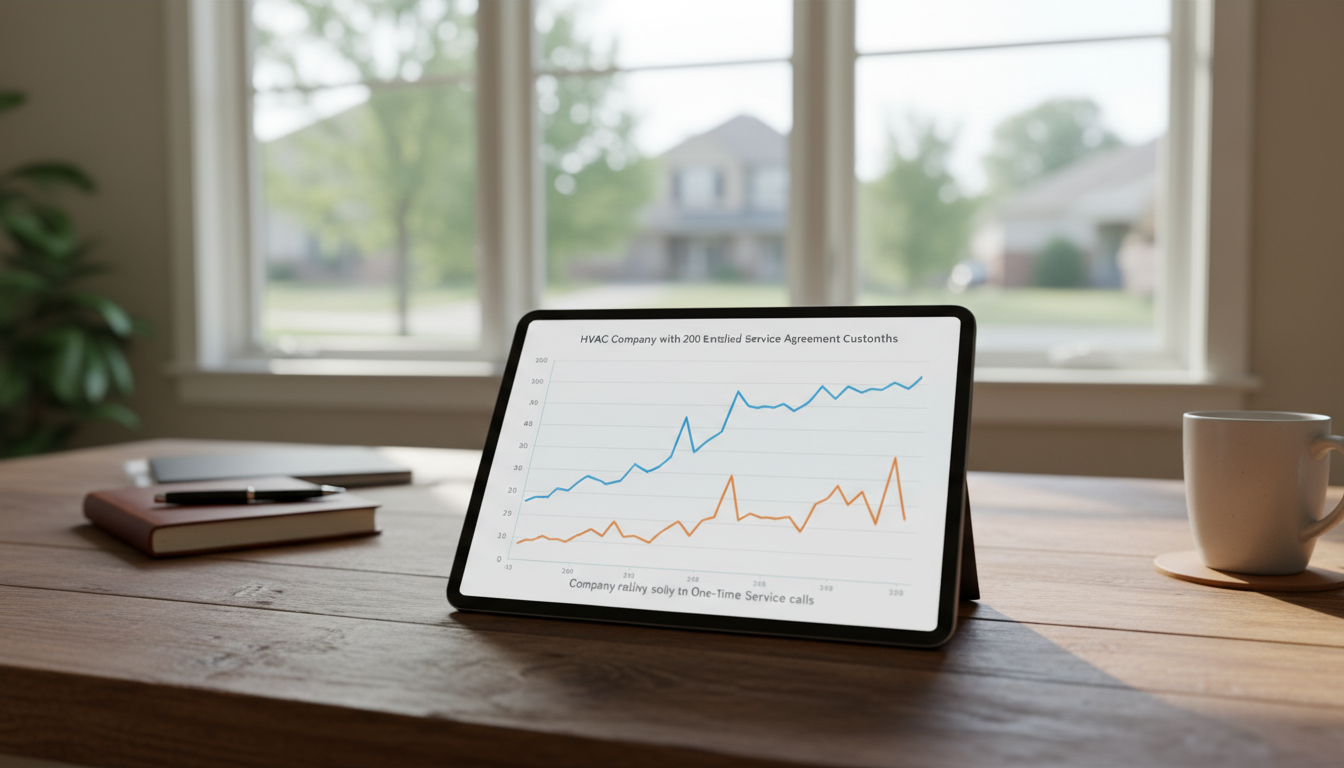
The revenue difference compounds quickly. A 200-customer service agreement base generating $200 per customer annually is $40,000 in predictable revenue before you've answered a single emergency call. That's payroll security, slower seasons covered, and marketing budget funded by existing relationships instead of chasing new ones.
What Does "Good" Follow-Up Actually Look Like?
Good follow-up is timely, personal, and outcome-focused. A front office person calls within 48 hours of service completion, references the specific job and technician by name, confirms the customer is satisfied, and transitions naturally into the service agreement offer. It's conversational—not scripted—and focused on solving the customer's problem (avoiding future breakdowns and expensive emergency calls) rather than selling a product.
The call lasts 3-5 minutes. If the customer says yes, enrollment happens on the call—payment collected, first service visit scheduled, confirmation email sent immediately. If they say "not right now," that customer gets flagged for a follow-up call in 30 days, typically timed before the opposite season starts (call AC customers before winter, heating customers before summer). Persistence matters, but it has to be systematic. Most HVAC companies make one attempt and give up.
How Often Should You Contact Enrolled Customers?
Enrolled service agreement customers should hear from you at least four times per year: two scheduled maintenance visit reminders, one mid-year check-in, and one renewal call. Some companies add a seasonal tip email or a birthday discount, but the core touchpoints are the service visits and renewal. The goal is to stay present without being annoying—helpful reminders, not spam.
Common Mistakes That Kill HVAC Customer Loyalty
The fastest way to lose an enrolled customer is to fail on your service promise. If someone pays for two tune-ups per year and you don't call to schedule them, they'll cancel at renewal. If your "priority service" customers wait just as long as walk-ins during a heatwave, they'll feel scammed. Service agreements are a commitment—you have to deliver or the program collapses.
Another common mistake is pricing agreements too low out of fear customers won't pay. A $99 annual plan that includes two full tune-ups isn't profitable once you factor in labor, parts, and scheduling costs. You're better off pricing appropriately ($200-$300 for most markets) and focusing on value communication—priority scheduling, discounts on repairs, no overtime charges—than racing to the bottom and enrolling customers into a money-losing program.
Finally, many HVAC companies treat service agreements as a marketing gimmick instead of a core business model. They launch a program, get distracted, stop enrolling customers, and let the base erode over time. Building HVAC customer retention requires consistency—every service call should generate an enrollment opportunity, every agreement should renew automatically unless the customer opts out, and someone should be tracking numbers monthly.
How to Recover If You've Lost Your Customer Base
If you've been operating reactively—responding to emergency calls without building a service agreement base—you can rebuild, but it requires a deliberate shift. Start by pulling your customer list from the last 24 months. Anyone who paid for a service call is a warm lead for enrollment. Have someone call through that list with a simple offer: "We've expanded our maintenance program and wanted to offer our existing customers first access. Can I get you enrolled for this year's tune-ups?"
Expect a 10-20% conversion rate on that outreach if your service was good. That's potentially dozens of enrolled customers from a few days of phone work. Then build the enrollment process into every new service call moving forward. Within six months, you should have a base of 100-300 agreements depending on your call volume. Within a year, that becomes the foundation of your revenue model instead of an afterthought.
Consider offering an incentive for early enrollment—a discounted rate for the first 100 customers, or a free filter replacement with signup. The goal is momentum. Once you have 50 enrolled customers, referrals and renewals start compounding. Once you hit 200, you have meaningful recurring revenue that smooths out seasonal swings.
Frequently Asked Questions
How much should I charge for an HVAC service agreement?
Price your service agreement between $150 and $300 annually depending on your market and what's included. Most programs include two seasonal tune-ups (spring and fall), priority scheduling, and a discount on repairs (10-20%). Higher-tier programs might include free filters, no overtime charges, or extended warranties. The key is covering your costs while delivering clear value—customers should save money and avoid emergencies compared to paying for reactive service.
What's a good enrollment rate for HVAC maintenance plans?
A well-run enrollment process should convert 20-30% of service calls into enrolled service agreement customers. If you're below 10%, your follow-up process is broken or your techs aren't mentioning the program. If you're above 40%, you've built a strong program with consistent communication and a compelling offer. Track this monthly—it's one of the most important metrics for long-term profitability.
Should my techs be responsible for selling service agreements?
No. Techs should mention the program exists and answer questions, but enrollment should happen through a follow-up call from your front office within 48 hours of service completion. This approach converts better because the customer isn't being sold while standing in their broken AC, and it frees your techs to focus on technical work. Separating sales from service also improves consistency—every customer gets the same professional enrollment conversation.
How do I keep customers from canceling their service agreements?
Deliver on the promise. Call to schedule their seasonal tune-ups proactively—don't make them chase you. Honor priority scheduling during busy seasons. Show up on time. If you're providing real value, renewal rates should be 85% or higher. The customers who cancel are usually those who paid for a service they never received or felt like the program didn't deliver what was promised.
What should I include in an HVAC service agreement?
At minimum: two seasonal tune-ups (one before cooling season, one before heating season), priority scheduling during peak times, and a discount on repairs (10-20% is standard). Many companies also include no overtime charges, free or discounted filters, and extended warranties on parts. Keep the offer simple and focused on the outcomes customers care about—avoiding breakdowns, saving money, and getting fast service when something does go wrong.
How long does it take to build a profitable service agreement base?
Most HVAC companies can enroll 100-200 customers in the first six months if they're making consistent follow-up calls after every service visit and reaching out to their existing customer list. Once you hit 200-300 enrolled customers, renewals and referrals start compounding. Within 12-18 months, a focused program can generate $40,000-$80,000 in annual recurring revenue, which stabilizes cash flow and reduces dependence on emergency calls.
Stop Losing Customers Between Service Calls
Building HVAC repeat customers isn't about better marketing or cheaper pricing. It's about consistent follow-up, a simple service agreement offer, and a front office team that actually moves customers from one-time calls to enrolled members. Every service call is an opportunity—but only if someone is there to close the loop.
If you're tired of starting from zero every season, chasing new customers to replace the ones you've lost, it's time to build the front office infrastructure that turns service calls into recurring revenue. Learn how BookAllLeads AI Business Team can handle every call, follow-up, and booking while you focus on the work only you can do.
John Edmonds is a native Texan and military combat veteran. He founded Book All Leads after identifying a critical gap in the service industry: business owners losing revenue not from lack of skill, but because no one was handling the calls, follow-ups, reviews, and payments while they were busy doing the work.
View LinkedIn Profile →