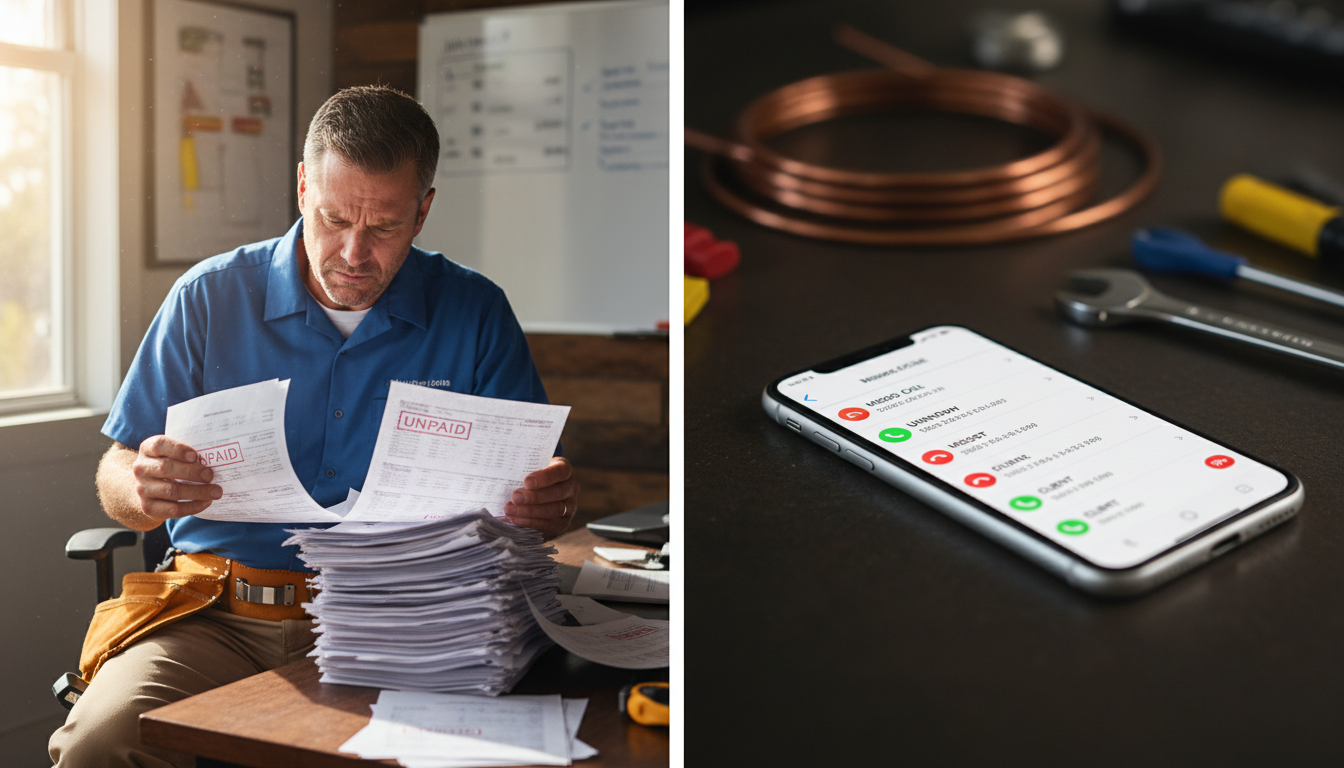
HVAC pay per lead services promise a steady flow of customers, but most contractors end up paying for leads they never close, competing with three other companies for the same "exclusive" lead, or chasing tire-kickers who were never serious about hiring anyone. The average HVAC contractor spends $75-$150 per lead through services like HomeAdvisor, Angi, and Thumbtack, yet only closes 10-20% of those leads — meaning you're paying $375-$1,500 per actual job. The problem isn't the lead quality alone; it's that buying HVAC leads treats the symptom while ignoring the real disease: you're already missing 30-40% of the people who call your business directly.
The Real Problem With HVAC Lead Services
Pay-per-lead platforms sell you someone else's traffic — people who filled out a form on a generic website, probably while comparing five other companies. These aren't your customers. They're shoppers who already have one foot out the door. According to Air Conditioning Contractors of America (ACCA), the average close rate for purchased leads sits between 10-15%, while leads generated from your own website, truck wraps, and referrals close at 40-60%. You're spending money to compete harder for lower-quality prospects.
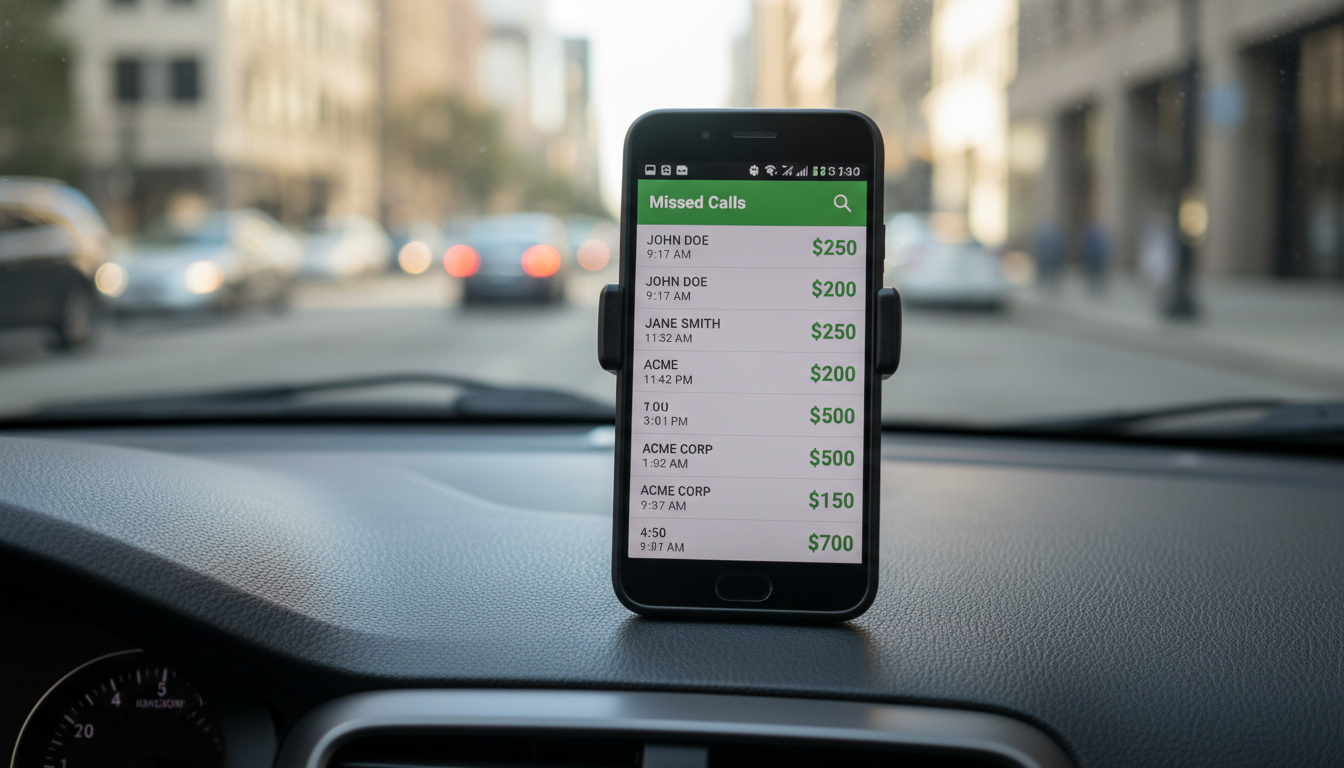
But here's the math that should make you angry: while you're paying $100-$150 for a shared lead from HomeAdvisor, your phone rang four times yesterday and nobody answered. Those calls came from someone who searched for your company by name, saw your truck in their neighborhood, or got your number from a neighbor. They wanted you specifically — not a list of five contractors. And you missed them.
Here's what most articles won't tell you: The HVAC lead cost problem isn't just that purchased leads are expensive — it's that they create opportunity cost blindness. Contractors become so focused on "getting more leads" that they ignore the gold mine sitting in their missed calls. You don't have a lead generation problem. You have a lead capture problem.
Why "Exclusive" Leads Aren't Actually Exclusive
Most pay-per-lead services advertise "exclusive leads," but read the fine print. Exclusive often means "sold to only three to five contractors" — which still puts you in a bidding war. The homeowner submitted one form and now has five HVAC companies calling them within ten minutes. Whoever calls first and sounds least desperate usually wins, which means you've paid $120 for a phone tag contest. According to InsideSales.com, response times over five minutes reduce close rates by 400%. If you're on a service call when that lead comes in and can't respond for an hour, you've already lost.
Why HVAC Contractors Keep Buying Leads Anyway
Contractors buy leads because it feels like taking action. You're busy, you need more jobs, and a lead service promises to deliver ready-to-buy customers straight to your phone. It's easier than fixing your marketing, training someone to answer calls, or figuring out why your website doesn't convert. Buying HVAC leads is the business equivalent of eating fast food — convenient, expensive, and it never quite fills you up.
The other reason is simpler: you genuinely believe you're getting all your other calls. Most contractors assume their phone is covered because they have voicemail, or because their wife/mom/sister-in-law answers when she can, or because they call people back "pretty quick." Then they install call tracking and discover they're missing 35% of inbound calls. That's not a guess — Bureau of Labor Statistics data shows that HVAC companies average 8-12 inbound calls per day during peak season, and most owner-operators are in the field for 6-8 hours. Do the math. You're missing calls.
Meanwhile, you're paying HomeAdvisor $1,200/month for fifteen leads that turned into two jobs. You could have hired someone to answer your phone for that.
What Actually Works Instead of Buying Leads
The fix isn't another lead source. It's capturing the leads you already generate. Every marketing dollar you've ever spent — your trucks, your yard signs, your Google ads, your referral relationships — drives people to call you. If nobody answers, or if they get a voicemail, or if they reach your technician who's elbow-deep in a condenser unit and can't talk, that lead evaporates. They call the next company. Usually within three minutes.
Instead of renting someone else's traffic, invest in a front office team that answers your phone, books your jobs, and collects your payments. Not an answering service that takes messages. Not a virtual assistant who "checks in a few times a day." A real team that picks up in three rings, knows your pricing, schedules your calendar, sends confirmations, follows up on estimates, and handles payment processing.
BookAllLeads builds and manages your entire front office team — six roles working around the clock. You don't learn software, you don't train staff, you don't manage schedules. Your phone gets answered, your jobs get booked, your payments get collected. You're live in five days, no contracts, and it costs less than what most contractors waste on pay-per-lead services in a single month. It's not a platform. It's not automation. It's people doing the job your business needs done.
The ROI Math That Changes Everything
Let's say you're spending $1,500/month buying HVAC leads and closing 15% of them at an average job value of $3,200. That's $6,400 in revenue from purchased leads. Now let's say you're missing 30% of your inbound calls (the industry average). If you get ten calls a day during your busy season and six of those are qualified leads, you're losing two qualified opportunities daily. Over a month, that's forty missed opportunities. Even if you only close 40% of answered calls — which is conservative for direct inbound — that's sixteen jobs you didn't get. At $3,200 per job, you left $51,200 on the table. Use our calculator to see what your missed calls actually cost.
Capturing those calls doesn't require more advertising spend. It requires someone competent picking up the phone. The contractors who figure this out stop buying leads entirely and reallocate that budget to conversion infrastructure — the unglamorous work of answering calls, following up, and closing business they already earned.
How to Evaluate HVAC Lead Quality Before You Buy
If you're still determined to buy leads, at least do it strategically. Not all HVAC lead services are equally terrible. The difference between a mediocre lead source and a genuinely bad one is whether they sell the same lead to multiple contractors, how they qualify leads before selling them, and whether they let you set parameters like job size, service type, and geographic radius.
Ask these questions before signing up:
- Is this lead sold to other contractors, and if so, how many? Anything over two is a waste of money.
- What's the refund policy for junk leads? If they don't offer refunds for disconnected numbers, fake inquiries, or people who never requested service, walk away.
- Can I set minimum job parameters? If you only do jobs over $1,500 and they're sending you $200 service call requests, you'll burn money fast.
- How long between lead submission and delivery? If it's over five minutes, the lead is already cold.
- What's your average close rate for contractors in my market? If they won't tell you, they don't track it — which means they don't care whether you succeed.
Even the best-case scenario for purchased leads still puts you in reactive mode, competing on price and speed instead of reputation and relationship. You're building someone else's business, not your own.
Is Pay-Per-Lead Worth It for Small HVAC Contractors?
For small contractors — solo operators or two-truck companies — pay-per-lead services are especially punishing. You're paying the same per-lead cost as a company with ten trucks and a dedicated sales team, but you lack the infrastructure to respond instantly, follow up persistently, and close aggressively. According to Plumbing-Heating-Cooling Contractors Association (PHCC), small contractors report close rates 8-12 percentage points lower than larger competitors on shared leads because they simply can't move fast enough. You're better off investing in systems that maximize conversion on your organic inbound calls — which close at three to four times the rate of purchased leads — than paying to compete harder for worse prospects.
What Successful HVAC Contractors Do Instead
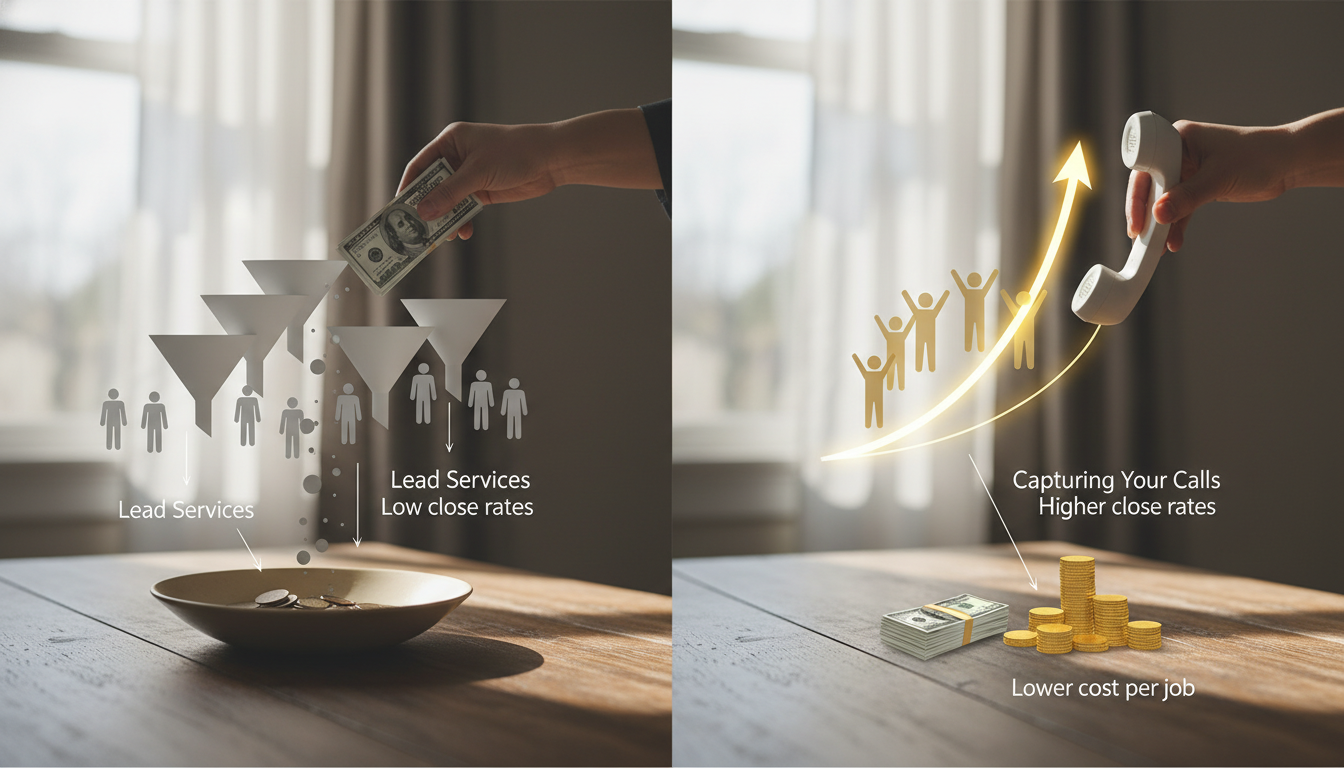
The contractors who've stopped wasting money on pay-per-lead services made one fundamental shift: they stopped trying to generate more leads and started converting the leads they already have. This sounds obvious, but most contractors never actually audit how many opportunities slip through the cracks. They assume their phone is covered because it rings and someone usually picks up. "Usually" is the word that's costing you.
Here's what converting your existing traffic actually looks like:
- Every call is answered by a real person within three rings, every time. Not voicemail. Not "call back later." Not your technician saying "uh, let me have the office call you." A competent person who takes the call, books the appointment, and confirms details.
- Every estimate gets a follow-up within 24 hours. Most contractors send an estimate and hope the customer calls back. They don't. Following up doubles close rates on quoted work.
- Every completed job gets a request for a review and a referral ask. Your best customers become your best lead source, but only if you ask. Most contractors never do.
- Every missed call gets returned within five minutes. Not two hours later when you're done with the install. Five minutes. After that, they've called someone else.
None of this requires spending more on advertising. It requires operational discipline — the boring, unsexy work of answering the phone and doing what you said you'd do. The contractors who master this spend zero dollars on purchased leads and have more work than they can handle. Check out our services to see how a front office team handles all of this without you lifting a finger.
A Real Example: From $2,400/Month in Lead Costs to Zero
Steve runs a three-truck HVAC company in Raleigh. For two years, he bought leads from HomeAdvisor and Angi, spending between $1,800-$2,400/month depending on the season. He closed about 12-15% of those leads and justified the expense because "it's how you get work." Then he installed call tracking to see how many leads his Google ads were generating. Turns out, his ads were working fine — driving 8-10 calls a day. The problem was that he and his guys were missing 40% of them. He was literally paying HomeAdvisor for leads while ignoring better leads that were already calling him.
He hired a front office team to answer every call, follow up on every estimate, and handle scheduling. Within 45 days, he stopped buying leads entirely. His close rate on inbound calls jumped from around 35% to 52% because every call got answered professionally and every estimate got a follow-up. His revenue went up 30% while his customer acquisition cost dropped by half. He's not special. He just fixed the actual problem instead of paying someone to spray more leads at a broken funnel.
Frequently Asked Questions
Are HVAC pay-per-lead services ever worth it?
Only in very specific situations: you're a brand-new company with zero online presence and no referral network, or you're trying to break into a new service area where nobody knows you yet. Even then, treat purchased leads as a short-term bridge while you build your own marketing engine. Never rely on them as your primary lead source. The unit economics don't work long-term, and you're building dependency on a platform that can raise prices or change terms whenever they want.
How much should I expect to pay per HVAC lead?
Most HVAC contractors pay between $75-$150 per lead depending on the service type and market. Complex jobs like full system replacements cost more per lead than service calls. Emergency service leads in competitive markets can run $200+. But cost per lead is the wrong metric to track — what matters is cost per closed job. If you're paying $100 per lead and closing 10%, your customer acquisition cost is $1,000. If you're answering your own inbound calls and closing 50%, your CAC drops to whatever your marketing costs per call.
What's the difference between shared and exclusive HVAC leads?
Exclusive leads are supposedly sold to only one contractor — you. Shared leads go to multiple contractors, usually three to five. In reality, many "exclusive" leads are still shared with at least one or two others, and the homeowner is calling around anyway. Exclusive leads cost 2-3x more than shared leads, but close rates are only marginally better because the customer is still shopping. You're paying extra to have fewer competitors, not to eliminate competition entirely.
Why do I keep getting low-quality leads from lead services?
Lead services make money on volume, not on whether you close the job. They're incentivized to generate as many form fills as possible, which means minimal qualification and broad targeting. Many leads come from people doing early research, getting quotes for future projects, or just curious about pricing. Some come from fake submissions (competitors checking your pricing, bots, lead farmers). The platform gets paid either way. You're the only one with skin in the game.
Can I negotiate better rates with HVAC lead services?
Sometimes, especially if you're spending over $2,000/month or willing to commit to a longer contract. But negotiating a cheaper bad deal is still a bad deal. The better negotiation is with yourself: "Should I keep paying for leads I can't close when I'm missing calls from people who already want to hire me?" The answer is almost always no.
How quickly do I need to respond to purchased leads to win the job?
Research from InsideSales.com shows that response times under five minutes close 4-5x better than response times over ten minutes. If you're buying shared leads, you're racing three other contractors. Whoever calls within two minutes usually wins, which means purchased leads require you to drop everything and respond instantly. If you're on a job site or driving, you've already lost. This is why purchased leads favor large companies with call centers and punish small operators who are actually doing the work.
Stop Renting Traffic and Start Converting Your Own
HVAC pay per lead services exist because they solve a problem for the platform, not for you. They monetize homeowner traffic that you could have earned yourself with better marketing, and they profit whether you close the job or not. The real opportunity isn't buying more leads. It's answering your phone, following up on estimates, and converting the traffic your reputation and marketing already generate. Every contractor who's broken the pay-per-lead habit says the same thing: "I can't believe I waited this long." Stop renting someone else's customers and start capturing your own. Learn how BookAllLeads AI Business Team can handle every call, follow-up, and booking while you focus on the work only you can do.
John Edmonds is a native Texan and military combat veteran. He founded Book All Leads after identifying a critical gap in the service industry: business owners losing revenue not from lack of skill, but because no one was handling the calls, follow-ups, reviews, and payments while they were busy doing the work.
View LinkedIn Profile →